Mathematics
TL;DR:
- The algorithm wants you to scroll past this. Way out
- If this feels too long to read, that is exactly why you might want to read it slowly.
- Math is the dialect of the universal and eternal. Find out why.
excerpt from sacred geometry: philosophy & worldview (pages 14-15):
I do not think people appreciate just how influential the mathematical uses of geometry have been in the development of rationality. Euclid’s Elements was the most popular textbook ever published and was required reading up until the early 20th century."
Euclid of Alexandria
(325 - 265 BCE)
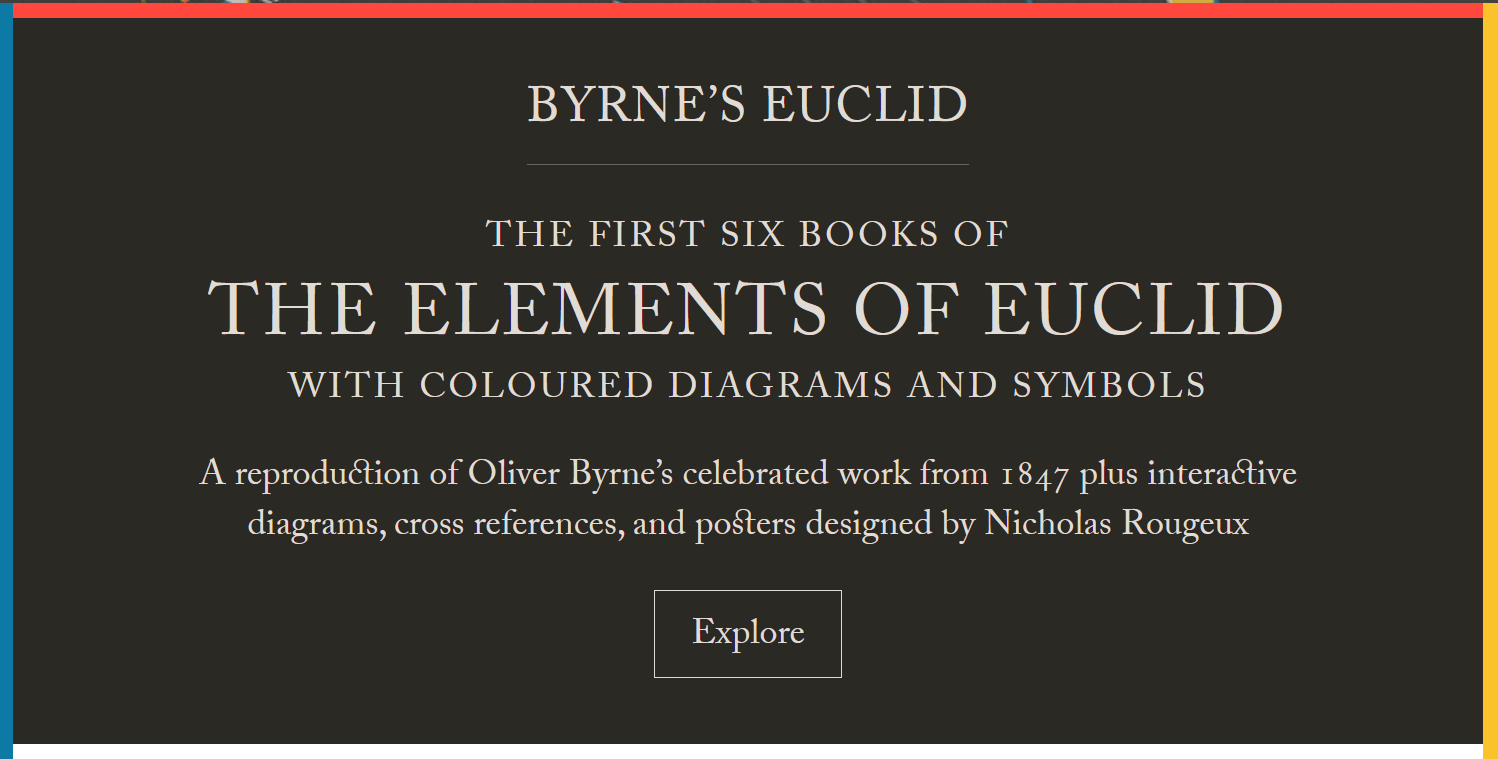
Learn The Elements Today
another excerpt from sacred geometry: philosophy & worldview (pages 14-15)
Geometry and mathematical education in general have been falling short for a long time. In 2011 one survey found, '77% of the students seemed to believe that math was not something that could be figured out, or that made sense. It was just a set of procedures and rules to be memorized. This is, of course, exactly the opposite of true.'
Given the failure of stimulating conceptual thinking in students, it is no wonder pre-rational mythic belief has erupted onto the global stage. Democracy is itself a rational creation which requires at least that stage of cognition within its citizens to function effectively.
Euclid showed how geometry can teach us to think clearly. From a few simple axioms, an entire interconnected edifice of logic can be reconstructed in each mind."
—William Herndon (1818-1891), law partner and biographer of Abraham Lincoln
Abraham Lincoln
(1809 - 1865 CE)
The Universal Ascent
Reclaiming the Language of the Universe
I highly recommend re-training yourself in mathematics as an adult—or perhaps, learning it truly for the first time. Many of us left school believing we "weren't math people." If you hated math in school, I invite you to look into that shadow. Math anxiety is often just a form of performance fear that robs the brain of its working memory. Revisiting it as an adult is a form of cognitive exposure therapy. You aren't just learning numbers; you are reclaiming the mental territory that fear once occupied.
Why We Learn the Language of the Logos
We don't learn math for its utility in calculating tips or measuring floorboards; we have calculators for arithmetic. Math is so much more than calculation. In fact, many professional mathematicians are notoriously bad at arithmetic because their brains are optimized for high-level conceptual synthesis, not rote algorithmic processing.
A mathematician is a machine for turning cheap coffee & expensive Japanese chalk into theorems.
The Brutal Honesty of the Ascent
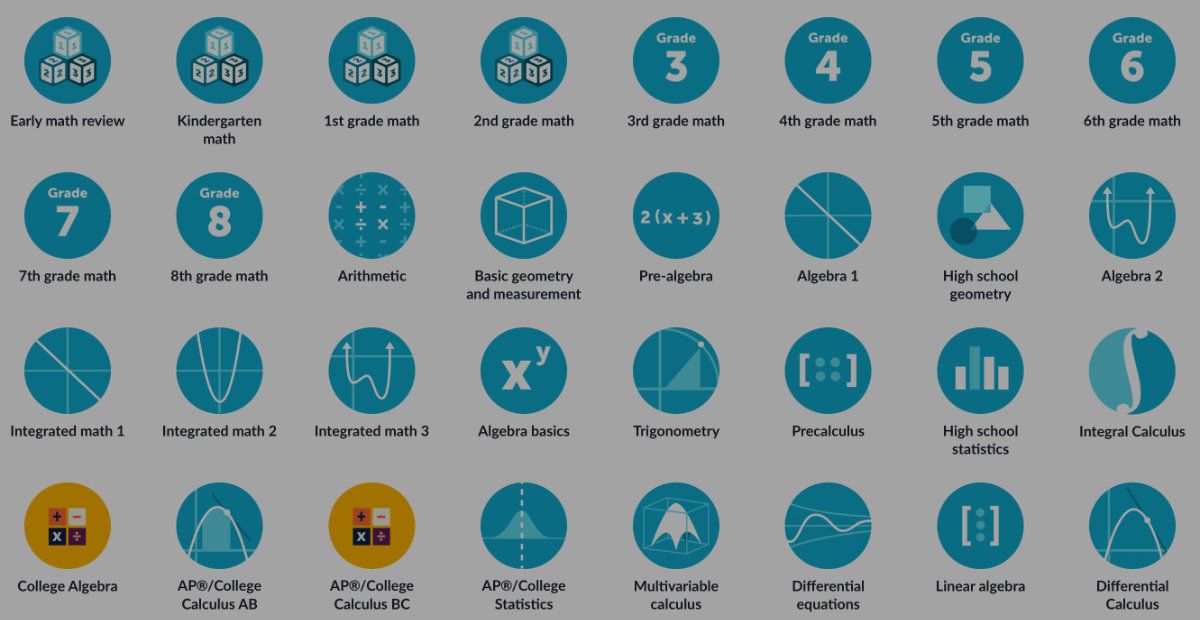
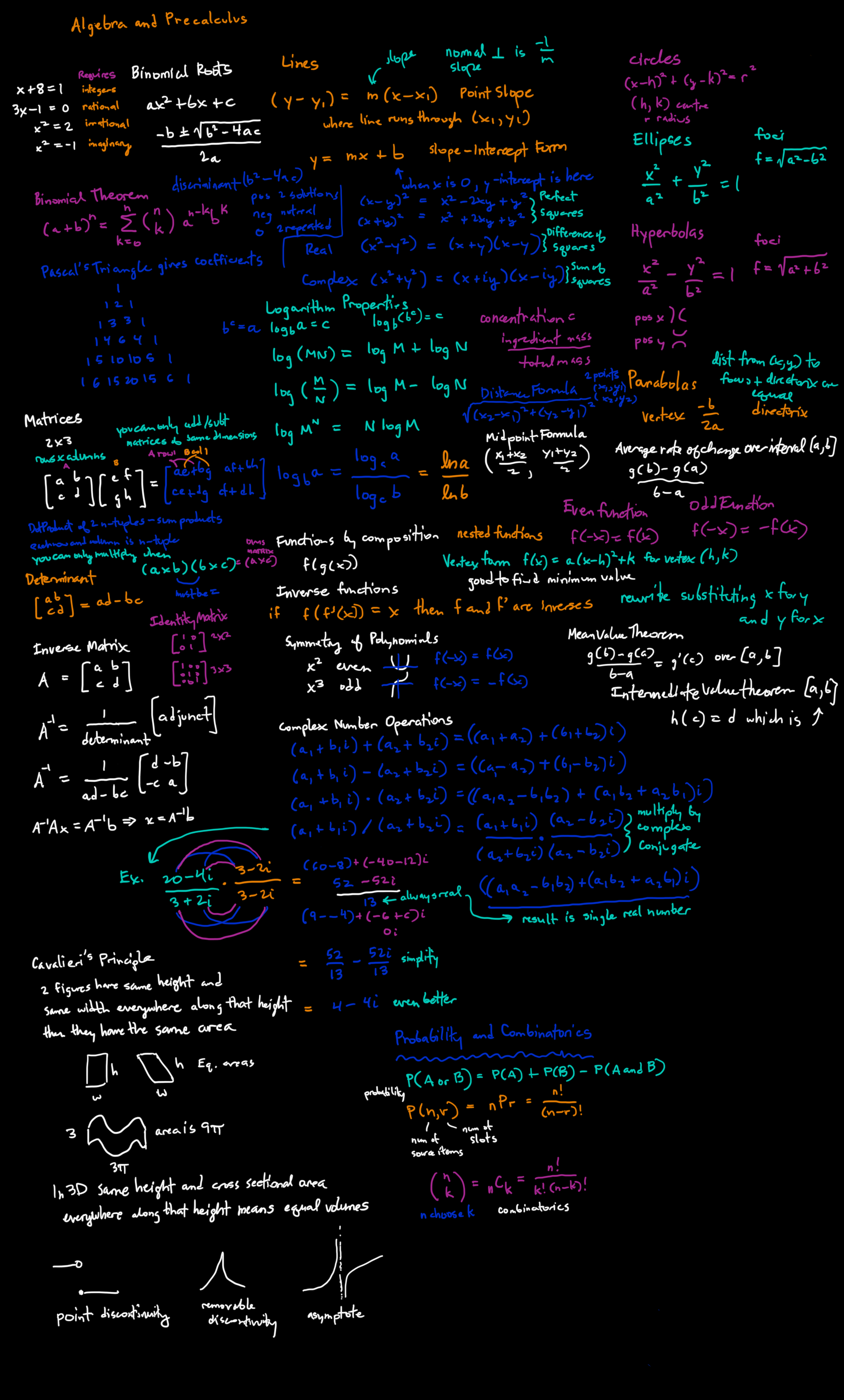
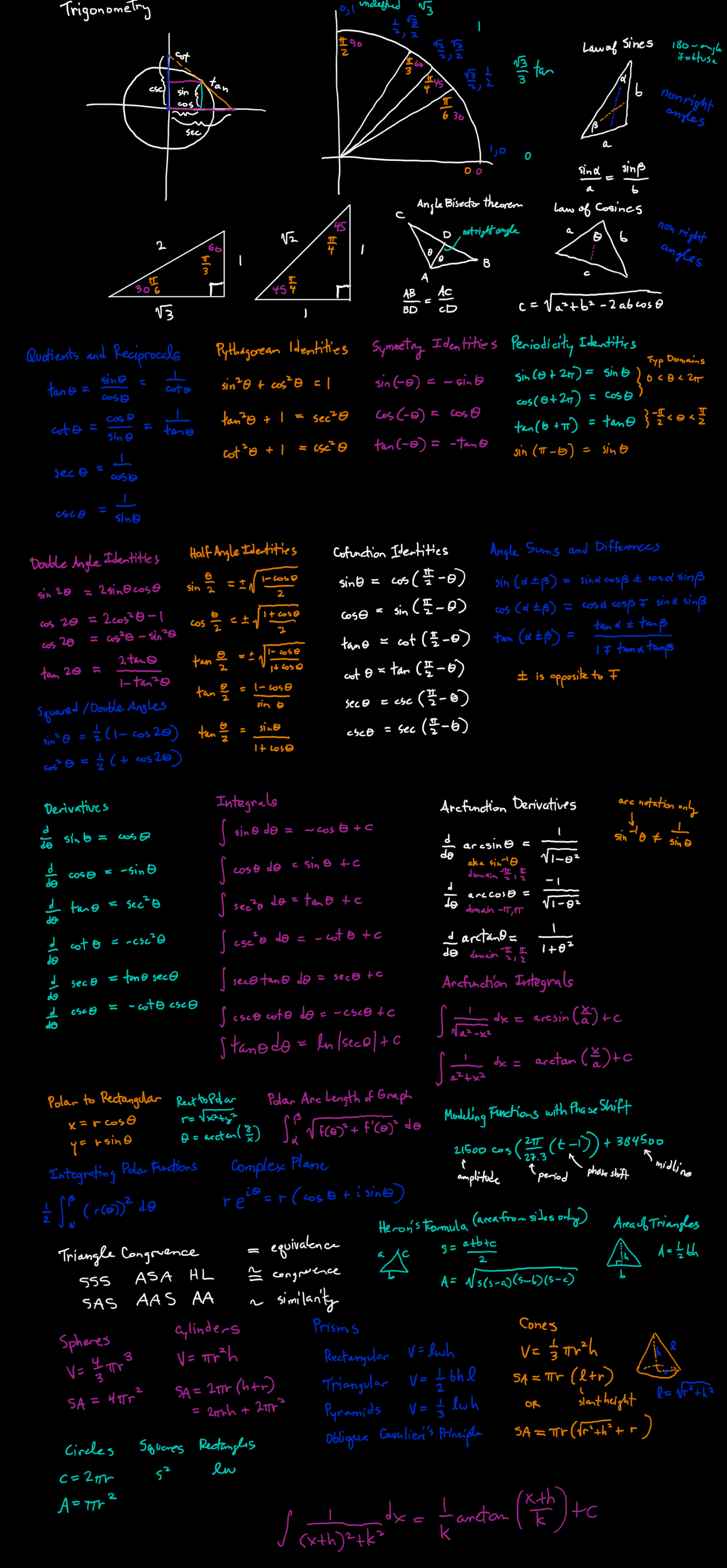
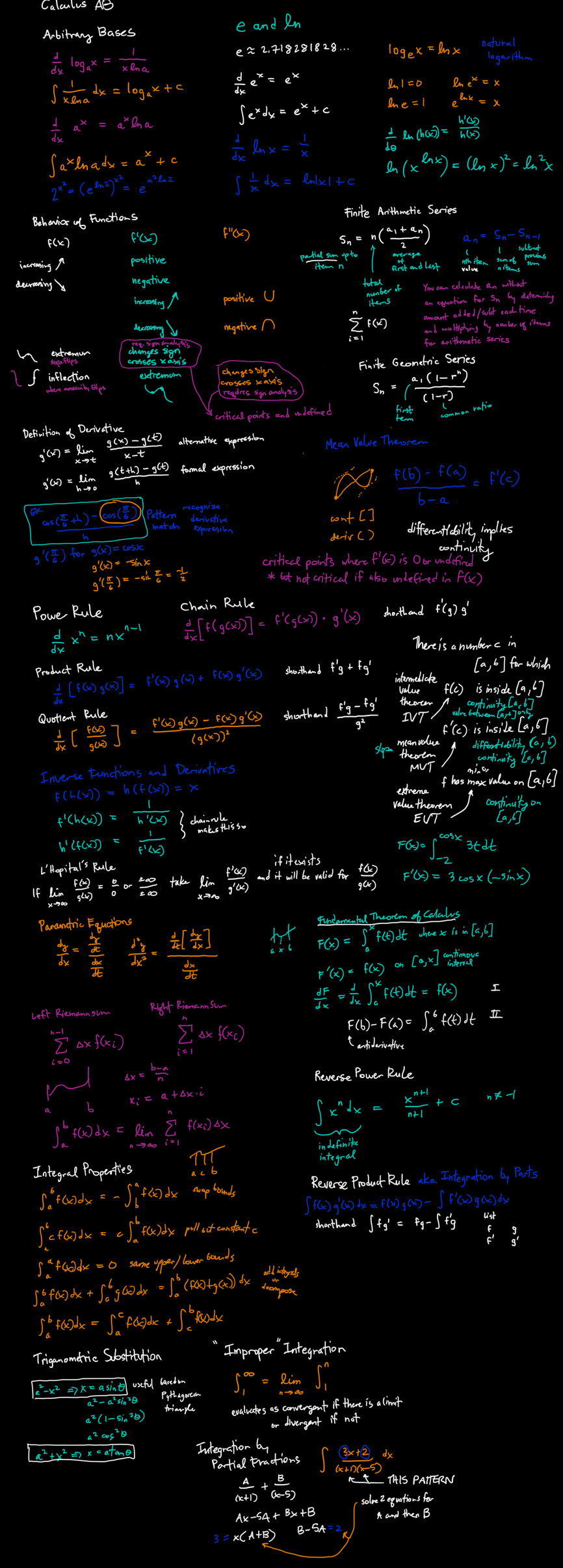
Two years ago, I realized that even with my background in engineering and architecture, I had forgotten the core of what I once knew. I decided to go back to the beginning. I used Khan Academy—a free resource that covers everything from Kindergarten to University—and I was brutally honest with myself. I went back as far as I needed to find the thread. For me, that was all the way back to Algebra. Sophie Germain (a French mathematician, physicist, and philosopher who made foundational contributions to number theory and the theory of elasticity) had a key insight:
Sophie Germain
(1776–1831)
"Algebra is but written geometry, and geometry is but figured algebra."
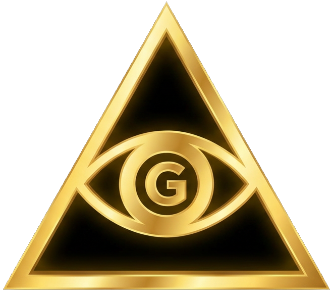
TOP VERTEX:
Mathematical Geometry
Euclid's Elements | KhanAcademy.org
Illuminated Epistemology
LEFT VERTEX:
Quantitative Geometry
Houses | Cars | Airplanes | Electronics | Rockets
RIGHT VERTEX:
Qualitative Geometry
Everything here on SacredGeometryAcademy.com
Engage in a Sacred Anachronism: DRAW GEOMETRY.
Stop consuming the digital world and start constructing an analog one. By returning to the primary language of
shape and proportion, you bypass the noise of the standard worldview and rediscover the qualia
of your own consciousness.

While a teenager’s brain might be faster at memorization, the adult mind is deeper. You have a lifetime of lived experience to map these abstract truths onto. You aren't just passing a test; you are revitalizing your left hemisphere and building a 'cognitive reserve' that serves as a bulwark against aging and the possibility of cognitive decline with the passage of time. This ascent is a revitalization of the left hemisphere—the part of the mind that seeks order, clarity, and truth.
The Tremendous View
Reclaiming your mathematical capacity is an act of mental sovereignty. It is an uphill slog, but the sense of accomplishment in making it up or back up that hill is a feeling like no other. Whether you are picking up a thread you lost decades ago or starting a brand new journey, the view from the summit is tremendous.
Whether you were an A+ student or someone who struggled to stay in the classroom, the mountain of math is open to you. KhanAcademy.org and other free resources have democratized this ascent. You just need the courage to find your thread and start climbing. You don't need a degree to speak the language of the universe. You just need the courage to take the first step.
If you have acquired the taste where learning becomes its own reward, congratulations, you have become an intellectual.
Green critique: not an Armani-spectacled, turtleneck-wearing, performatively vapid poseur, but a person who simply loves to learn is what we call a geek, if you want to denigrate it with a label.
Dropping back down to Blue (tongue-in-cheek): The old testament Psalm 37:11, modulated for the present. If you prefer the new testament vibe, turn to Matthew 5:5, which says about the same thing:
"But the geek shall inherit the earth; and shall delight themselves in the abundance of paying work."
Scott Onstott
(1970 – )
Turqouise aphorism: "Mathematics is the universal language of consciousness."
My Notes Made While Climbing the Mountain of Maths

Of the full cohort entering 9th grade, only 54% enroll immediately in university, after accounting for the 87% high school graduation rate (leaving 13% dropouts) and 62% subsequent college-going rate among graduates.
From anecdotal professor data at Harvard, just 3-7% go beyond this level to study other subjects such as multivariable calculus, differential equations, complex analysis. Most STEM dropouts occur before advanced mathematics.
In Singapore nearly all of their 5,000 university grads go beyond Calc III+. In China this is around 40% and in Europe this is ~15-20%."
Personal note: I remember taking differential equations, linear algebra, and vector calculus in UC Berkeley's Mech engineering program, which perplexity says is "notoriously rigorous, often weaving infinite-dimensional concepts into the curriculum as motivation for engineering applications." By the time I was learning about infinite dimensional vector spaces I have come to the end of the road, which seemed overly abstract to me at the time. Understanding infinite-dimensional vector spaces and advanced vector calculus is highly useful—even essential—for cutting-edge AI researchers today. My interests had shifted and I changed majors to Architecture, which developed a different hemisphere of the brain. It launched me into another domain and vocational direction.
It is interesting to note that of say 1000 students that entered the average US high school, 870 graduate, and 540 go to university. Of these, perhaps only 5% or 27 people go beyond what is possibly available in high school math (equivalent of Calc III+). And Berkeley's rigorous program would probably drop this to perhaps 10 persons. That is 100X filtering.
This is not about why Scott is so smart. If only 1% of kids who enter high school end up going beyond the maximum mathematical education that is offered there in university or using free online resources, that is a sorry state of affairs. Motivated homeschoolers check out MathAcademy.com (AI-driven, paid) and KhanAcademy.com (human made, free).
With AI being so good at math you may say why bother learning math? Use a calculator or Wolfram Alpha. Yes do that, but you miss out on learning for learning's sake and the neuronal patterning that you can't get any other way.
Math education transcends computation or STEM utility, serving as a foundational discipline for cultivating abstract reasoning, logical rigor, and intellectual discipline that shape human cognition broadly.
Mathematics trains the mind to identify patterns, construct airtight proofs, and navigate uncertainty through deduction—skills Euclid's Elements exemplified by reducing geometry to 13 axioms and 10 postulates, yielding theorems that revealed universal order from simple rules. Elements dominated because it wasn't mere geometry: it was a portable gymnasium for the mind, proving theorems from axioms to reveal necessity itself.
Math mirrors philosophy's quest for first principles, fostering clarity amid complexity; studies link early algebra exposure to improved executive function and problem-solving in non-math domains.
"It is marvelous enough that man is capable at all to reach such a degree of certainty and purity in pure thinking as the Greeks showed us for the first time to be possible in geometry." —Albert Einstein
- Precise language combats vagueness, honing argumentation like Socratic dialogue.
- Proofs instill perseverance and falsifiability, countering cognitive biases.
- Abstraction builds empathy for unseen structures, paralleling ethics or metaphysics.
Beyond AI's symbolic crunching, math uniquely builds mathematical intuition—the epiphany of seeing symmetries or infinities—which refines judgment in law, policy, art, and life.
As Whitehead noted: "The study of mathematics is apt to commence in disappointment... [but] enlarges the imaginative realm."
TOP VERTEX:
Mathematical Geometry
Euclid's Elements | KhanAcademy.org
Illuminated Epistemology
LEFT VERTEX:
Quantitative Geometry
Houses | Cars | Airplanes | Electronics | Rockets
RIGHT VERTEX:
Qualitative Geometry
Everything here on SacredGeometryAcademy.com
The Most Beautiful Theorem in Mathematics (Not!)
A Little Tangent
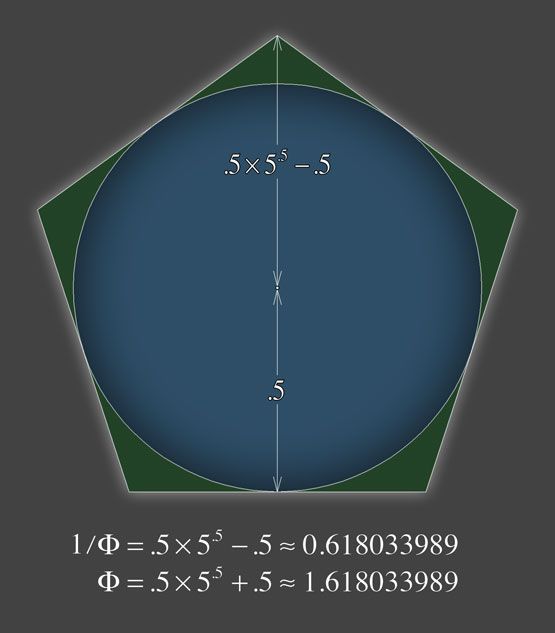
I discovered these symmetries in the golden ratio: it's all about "phive." There is a profound numerical resonance hidden within the geometry of life. Here, the five-sided symmetry of the pentagon is revealed to be a literal reflection of the "5-ness" of its own internal logic. By using the square root of five (raised to the power of 0.5) as the primary operator, the proportions of the inscribed circle and the pentagonal vertices emerge not as random decimals, but as a harmonic dialogue. It is a self-referential loop where the number five defines the root of five to manifest the shape of five—proving that there is a deep partnership between the quantitative and qualitative aspects of mathematics.
A Little Transcendental
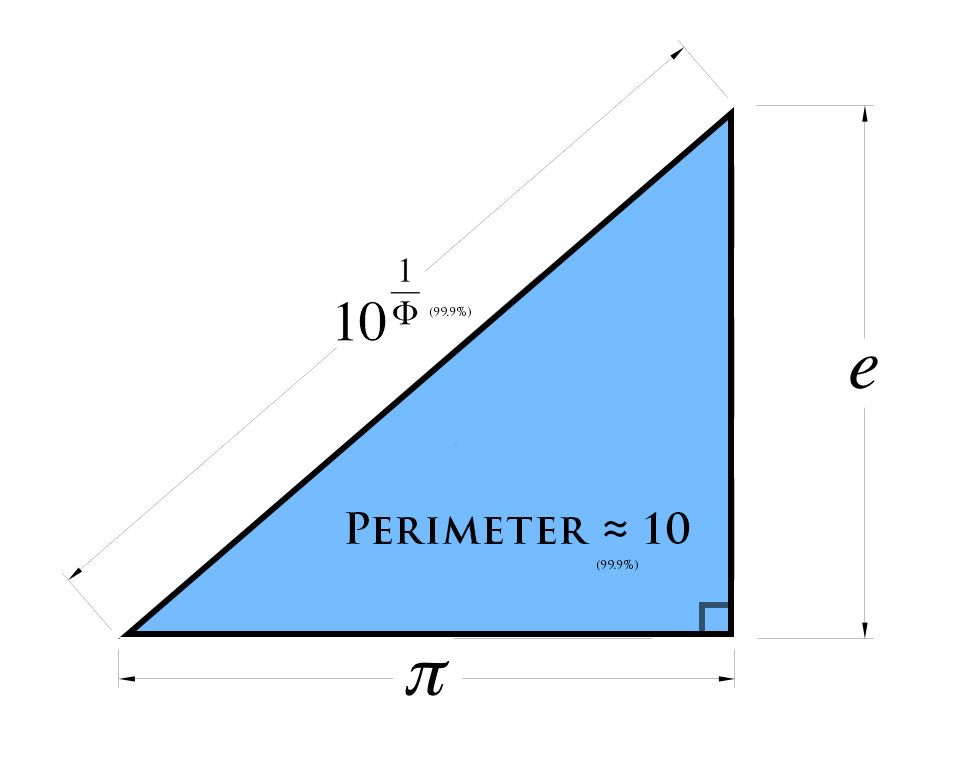
One More Thing...
The gap is a feature, not a bug.
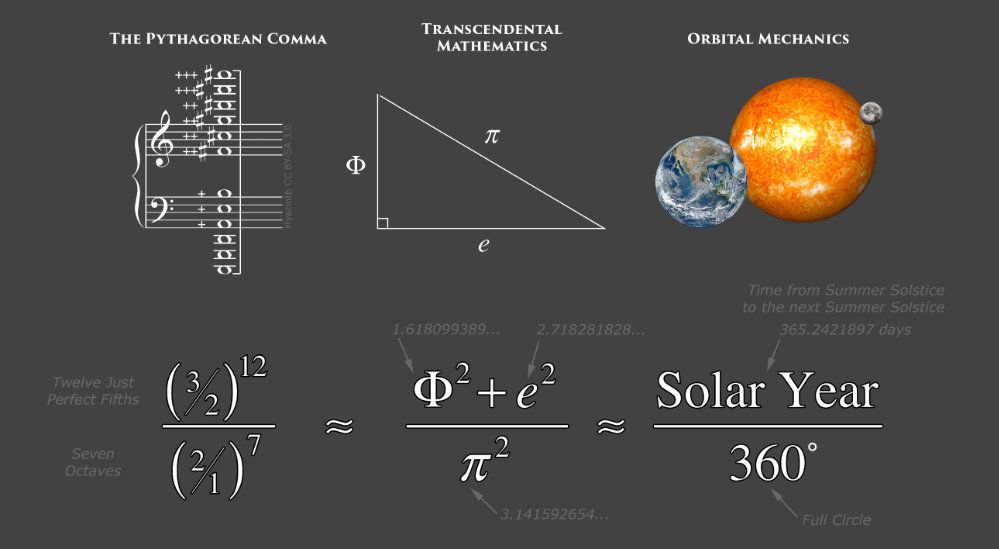
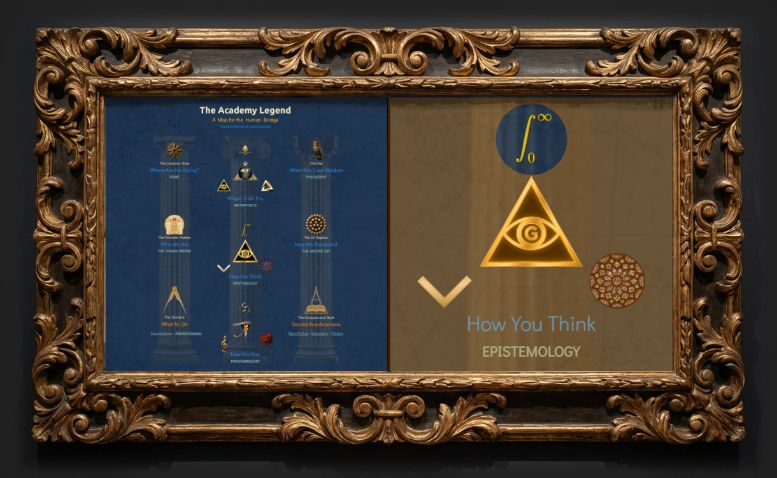
The Academy Legend
A Map for the Human Bridge
The Architecture of Consciousness
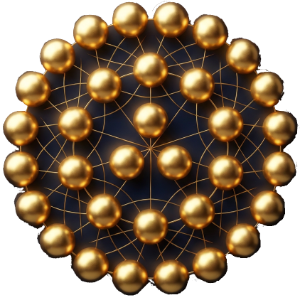
The Sacred Geometry Map Legend
— click icons for navigation —