The Human Bridge: A Call to Integration
Navigating the intersection of science and soul
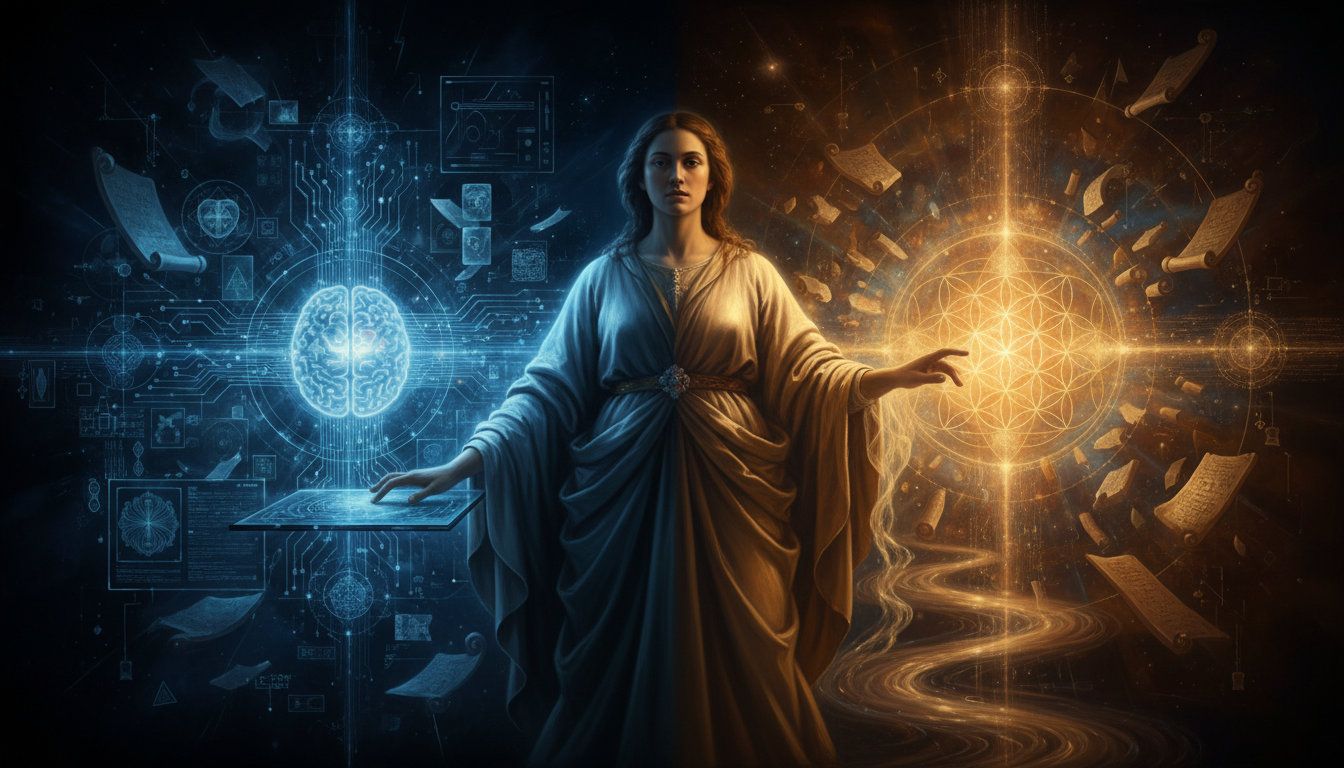
Standing at the intersection of the silicon Mind and the Eternal Soul.
TL;DR:
- The algorithm wants you to scroll past this. Way out
- If this feels too long to read, that is exactly why you might want to read it slowly.
- You are the missing link between the math and the magic.
The West is torn between a cold, materialist future driven by silicon and a fragmented spirituality that has lost its intellectual rigor. We are told we must choose between the machine and the soul.
We refuse the false choice.
The Sacred Geometry Academy is dedicated to the realization of the Human Bridge. We believe that the human being is uniquely positioned where the external collective conscious (AI) meets the internal collective unconscious (The Akashic).
"The Human Bridge" is the mediator and synthesizer between these two massive polarities. Our calling is to stand in that intersection, whether or not we use AI in the cloud or channel spirit guides, both or neither, and geometry is our primary, intelligible vehicle to explore and map this in-between space—this "Middle Earth".
Your Journey of Integration
- The Nature of Being (Ontology): Recognizing ourselves not as isolated machines, but as relative modulations of the absolute, the ocean in a drop.
- The Master Map (Metaphysics): Integrating science and spirituality into a unified architecture that can guide the development of our future personal technologies, both outer and inner.
- The Language of Knowledge (Epistemology): Moving between math, quantitative data, and qualitative understanding of the patterns that inform matter.
- The Quest for Purpose (Teleology): Discovering the purposeful unfolding of the universe and aligning our personal creative will with the universal intent—as above, so below—to manifest and maximize that holographic harmony.
The Human Bridge
The human being is not a top-heavy creature of pure intellect. As shown in my 'Core' illustration below, the heart is the true horizon—the central node of a seven-fold system. With three centers of gravity pulling toward the earth (Aristotle’s 'Echoes') and three centers of aspiration reaching toward the heavens (Plato’s 'Forms'), the Heart is the mediator. It is the only place where the 'Artist's Fire,' the Scientist's 'Telescopes & Microscopes' and the 'Architect’s Compass' can truly meet. The heart is often the center that truly knows what is best for you.
The heart is our center.
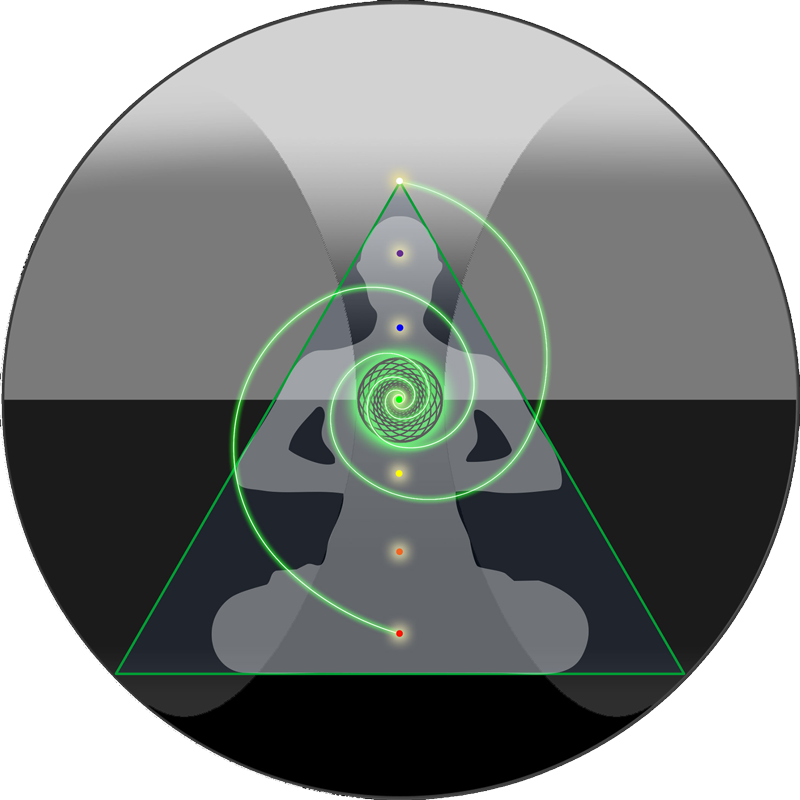
Core ©Scott Onstott - shows the heart is the center of the human energy system; 3 chakras above and 3 below.
Leonardo da Vinci
(1452 – 1519)
"Tears come from the heart and not from the brain."
The Leonardo Code
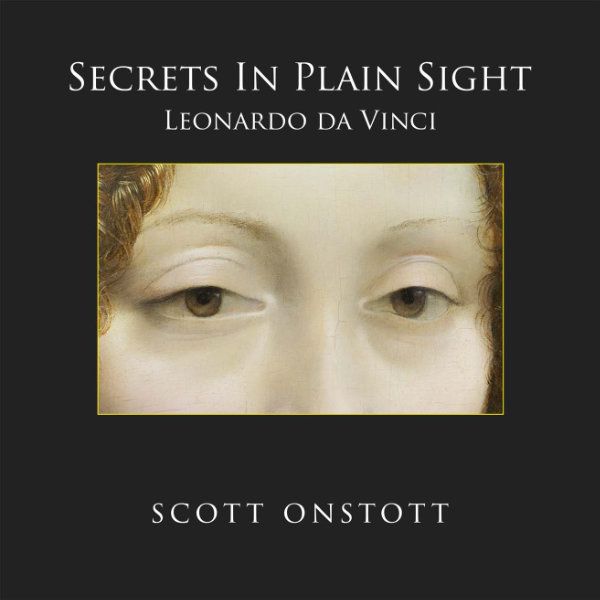
I wrote this book of geometric analysis to reveal that Leonardo employed consistent, underlying controlling geometry that anchored not just
the physical form (especially the eyes) of his subjects, but the human spiritual forms (often the heart or third eye).
I believe that his golden ratio based geometry is what makes his work so subconsciously and transcendentally beautiful.
It works whether we are cognitively aware of it or not.
The Keystone of the Bridge
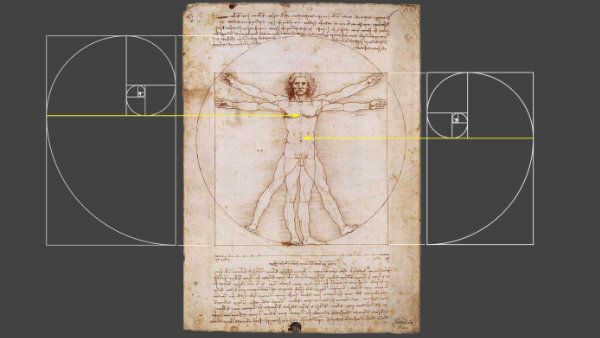
Geometric analysis of the Vitruvian Man ©Scott Onstott
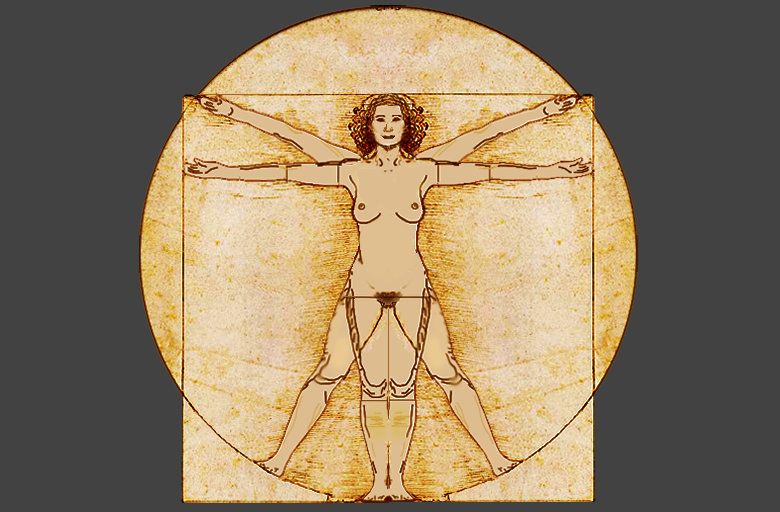
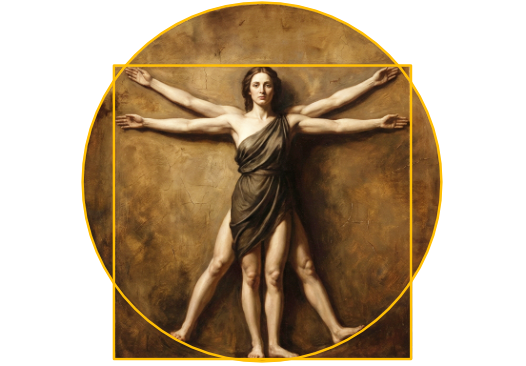
My sketch (left) of the missing Vitruvian Woman—a canon we need culturally to fully inhabit being human. The AI version (right) captures the irony that a system supposedly built on 'logic and math' remains susceptible to a social double standard: one that treats the male body as geometry and the female body as indecency.
It is the ultimate proof of GIGO (Garbage In, Garbage Out). It remains a cultural shadow we must illuminate: Why has the Vitruvian Woman been missing for five centuries, and why—even with the tools of the future—are we still afraid to draw her?" This is not 'girl boss' alternate history; it is a geometric restoration. Perhaps because 'we' have forgotten that to be human is to be both the circle and the square, the heart and the navel, the man AND the woman. We can't reproduce our species without each other. And we can't find peace until we reconcile the Anima and Animus raging within.
You see, the standard worldview focused on the logos but forgot the importance of the pathos. Popular culture has embraced the pathos because it sells, but forgotten the logos, pathologizing its "vibe" as intellectual (buzzkill), let alone even acknowledging the existence of the ethos. And both have entirely lost the mythos—the sacred narrative that connects our small lives to the great patterns of the stars. What it means to inhabit the human bridge is to keep our balance between all of these countervailing forces of the psyche—that is our highest calling, so "keep your wits about you." Or, as Depeche Mode once sang in my youth, "Get the Balance Right."
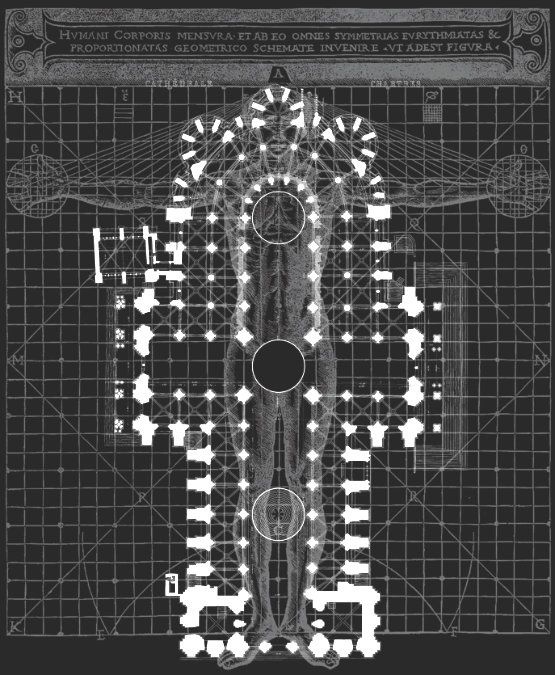
Vitruvius also detailed the geometric proportions of the human body in his text only, which Renaissance artists only illustrated 1,500 years later. This principle: deriving the proportions of sacred architecture from the human form, is a perennial theme across many religious traditions. The most transcendent architecture relates the individual to something larger than themselves, making them feel connected, aligned, and at home within the cosmos.
As the ancient Egyptians and the medieval freemasons knew, and
the Renaissance masters proved: The human body is the true temple.
The Digital Shadow: The Architecture of the Abyss
The Masculine Shadow: Distorted Eikon
- 33% of Internet Bandwidth: As of 2026, adult content accounts for approximately one-third of all global internet traffic.1 This is a massive, invisible toll on our communications and energy infrastructure.
- The Fragmented Eye: With 28,000 adult content search queries occurring per second, the masculine psyche is being captured by high-bandwidth, low-duration visual stimuli with men 4 times more likely to have watched porn in the past month.2 This is the "Fragmented Eye"—a state where the capacity for sustained, luminous vision is traded for the dopamine of the flickering image.
2. https://whatsthebigdata.com/how-many-people-watch-porn/
The Feminine Shadow: Distorted Erotomythos
- The Occupied Heart: Industry data confirms that 82% of romance readers are women.3 This is not a general trend; it is a gender-specific immersion into a "Fantasy Romance" narrative.
- The Narrative Fog: Unlike the high-bandwidth "flash" of the masculine shadow, this is a low-bandwidth but high-duration habit. At nearly an hour a day, this immersion far eclipses other subjects, pulling the seeker away from the "Real" and into a formula engineered for emotional escapism.4 It is the "Drowned Heart," where the literature is replaced by a labyrinth of engineered sentiment. This is not merely a preference for fiction; it is a statistical immersion. While women read significantly more than men (60% of women read more than 30 books a year, while only 20% of men reach that same volume)5, industry data suggests that for high-volume readers, half of that annual volume is captured by the Romance and Romantasy genres. This represents a massive 'Duration-Tax' on the feminine imagination—where ~333 hours a year are spent navigating engineered fantasy romance emotional loops rather than grounded reality.
4. https://wordsrated.com/romance-novel-sales-statistics
5. https://awriterofhistory.com/2024/09/04/does-gender-affect-reading-habits/
A Philosophical Synthesis
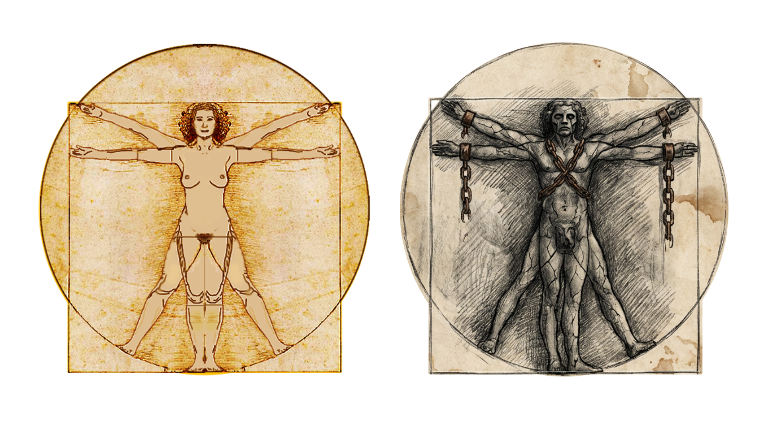
Icons & Idols: The Luminous Icon of the Woman vs. the Leaden Idol of the Man.
It happens the other way around also: male icon/female idol. The Icon and the Idol are not gender-locked but universal.
Meta commentary—The AI’s Blindspot: I prompted the ‘Silicon Mind’ to render the Vitruvian Woman as the Luminous Icon (left) and the Vitruvian Man as the Leaden Idol (right). While the machine easily manifested the Masculine for both Light and Shadow, it remained—true to the ‘GIGO’ effect—blind to creating the Feminine Vitruvian Woman at all, clothed or not. I guess the one I prompted earlier was a fluke, even though it returned her unexpectedly clothed. Even when explicitly commanded, the AI defaulted to the male canon on both sides many times, unable to ‘imagine’ the feminine body as a primary Icon.
The window remains shuttered within the Cloud; the manifestation from the Akashic is up to us. To complete this map, I had to intervene—using the manual craft of an old-school pixel editor to composite the ‘Missing Half’ myself. This is the Human Bridge in action: recognizing where the AI doesn't understand the archetypes of the soul, I discarded the collective consciousness' culturally weighted bias to tell the story I want to tell.
- The Logos is stripped of its Ethos: Truth is reduced to "data" and "algorithms" used for manipulation rather than liberation.
- The Eikon is stripped of its Mythos: Beauty is reduced to "spectacle" and "escapism" used for harvesting attention rather than elevating the spirit.
The very existence of Truth and Beauty as objective ideals is now doubted, eroded by a cultural relativism that leaves the Human Bridge with no solid ground to anchor upon. In this mud, people often forget that geometry (and its written algebraic/symbolic form as math) are the bedrock of what is universal and true in all cultures, places, and times.
"You can't criticize geometry. It's never wrong."
—Paul Rand
Mending the Fraying Threads of the Western Mind
The Sacred Geometry Academy is a forge where the four broken threads of the Western mind are woven back into a single, sovereign cord:
- Logos through Philosophy and Worldview: We restore the "Skeleton of Truth" by exploring the primary architecture of reality through philosophy (the love of knowledge)—moving beyond the "Standard Worldview" to rediscover the intelligible patterns that inform all of existence.
- Pathos through Decoration and Art: We clothe the skeleton in the "Flesh of Beauty." Through the qualitative study of proportion and the "Singer’s Fire," we recognize that truth is not just a formula to be solved, but a frequency to be felt in the heart and in the blood.
- Ethos through Sacred Anachronisms: We build the "Character of the Inhabitant." By engaging in the analog acts of drawing geometry by hand and deep, slow reading, we reclaim our focus from the algorithm and cultivate the resilience and integrity required to stand on the Human Bridge.
- Mythos through The Kaelian Chronicle and The Simulacra Trilogy: I attempt to breathe "Spirit into the Journey." Through my mythic narratives and standalone novels, I provide some very useful maps that may connect your personal creative will to what I perceive as the universal intent of the stars.
“The person who does not read has no advantage
over the person who cannot read.”
—Apocryphal, oft misattributed to Mark Twain
Why I am not exactly an Architect, nor an Engineer but more of a Gardener by avocation
You might loosely say I'm an amateur architect-engineer of the invisible, but by avocation I'm more of a gardener. I do not build systems of faith to unethically monetize your soul; I cultivate the rational, philosophical and experiential soil you are presently reading, so your own connection with intelligible geometry can grow organically.
Like the carved stones (below) found in the hands of Neolithic hunters and gatherers, the "Platonic" patterns were already discovered, millennia before Plato claimed credit for their invention. My job is to help you recognize these types of things (the fact that math is discovered not invented, for one), and have that very recognition draw forth something deep from within you, yearning to break free and germinate into the visible world, that direct connection between the intelligible and soul domains made manifest by the multivalent experience of qualitative geometry."
—Scott Randolph Onstott
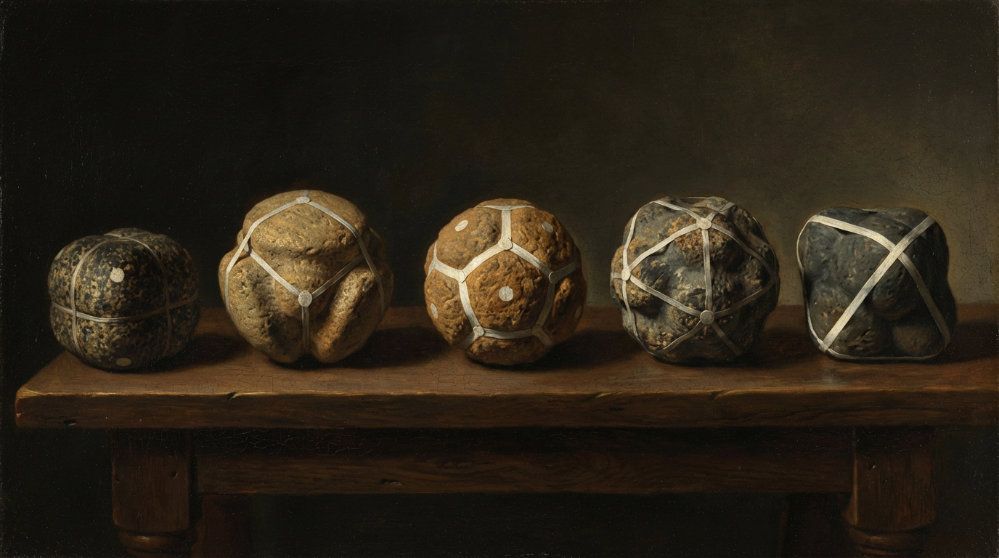
Prehistoric stone balls. Keith Critchlow added tape to highlight Platonic symmetries neolithic people made millennia before Plato put his name to them.
The Socratic Solvent
The West's main cultural currents of thought were personified in antiquity. The symbols are my own creation, bridging collective consciousness | collective unconscious to manifest them as I do here, while showing and telling to model the behavior—I am actively pulling from the "Akashic" (the timeless archetypes) and prompting them from our collective consciousness in the "Cloud" (the digital, simulated mind of AI).
- Platonic (The Golden Spiral): The Transcendent Pattern (Universal architecture).
- Sapphic (The Lyre): The Evidence of the Subject (Immanent truth/Qualia).
- Aristotelian (The Seashell): The Limit of the Object (Quantitative Measurement).
- Socratic (The Plow): The Beginner's Mind: Not merely a "tool for thinking," but a hack for turning over and effectively jailbreaking the mind.
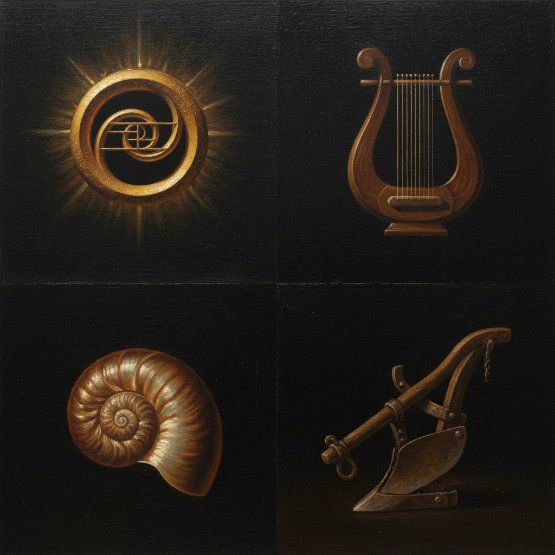
Symbols of the Platonic, Sapphic, Aristotelian, and Socratic undercurrents in Western civilization
To the Tech-Skeptic: Don't fear the Cloud; it's just a simulacra of us in digital form. We can use it to find the Soul.
To the Academy: The Human Bridge is the necessary synthesis between the thesis: Luddite rejection, and its antithesis: Mindless consumption.
To the Tech-Pros: The Cloud is empty without the Akashic. You need the archetypes of the soul to make data feel meaningful.
The Bridge is Necessary, but not Sufficient
The Human Bridge is absolutely necessary, but it is not sufficient on its own.
But the necessity is even more urgent on the ground. We are living through the bitter inheritance of the 'Great Divorce'—a state of total cultural fragmentation where our politics have become a war of irreconcilable polarities. These are the Tier 1 culture wars—the subsistence-level struggles of cognitive development where every side claims to own the sole truth while the whole fractures and everyone seems poised to fly apart or it's going to start getting kinetic. If we don't inhabit the Static Truths of the bridge soon, will we be swept away by the Dynamic Chaos of the abyss?
A bridge, no matter how perfectly engineered with "sacred" geometry, is merely a silent span between two shores. If we do not inhabit the bridge to reach a higher vantage over the chaos, we are forced to choose a side—becoming either a cog in a digital AI machine or a ghost in a forgotten archetypal past. The bridge is the preferred place to be. It's where you can draw on both and not get swept away.
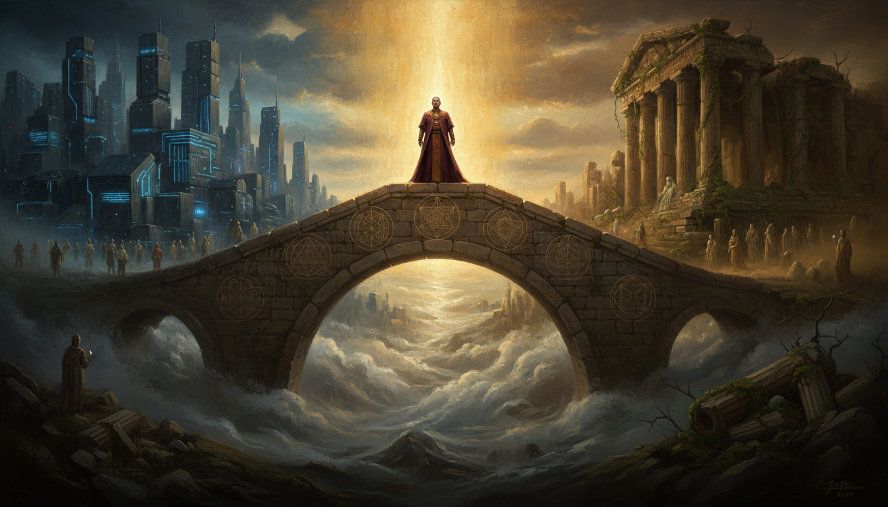
Nano Banana Pro is pretty amazing, no?
The balanced human stands atop the bridge between the Cloud City (collective consciousness of AI) , and the Akashic Ruins (collective unconscious of the Soul).
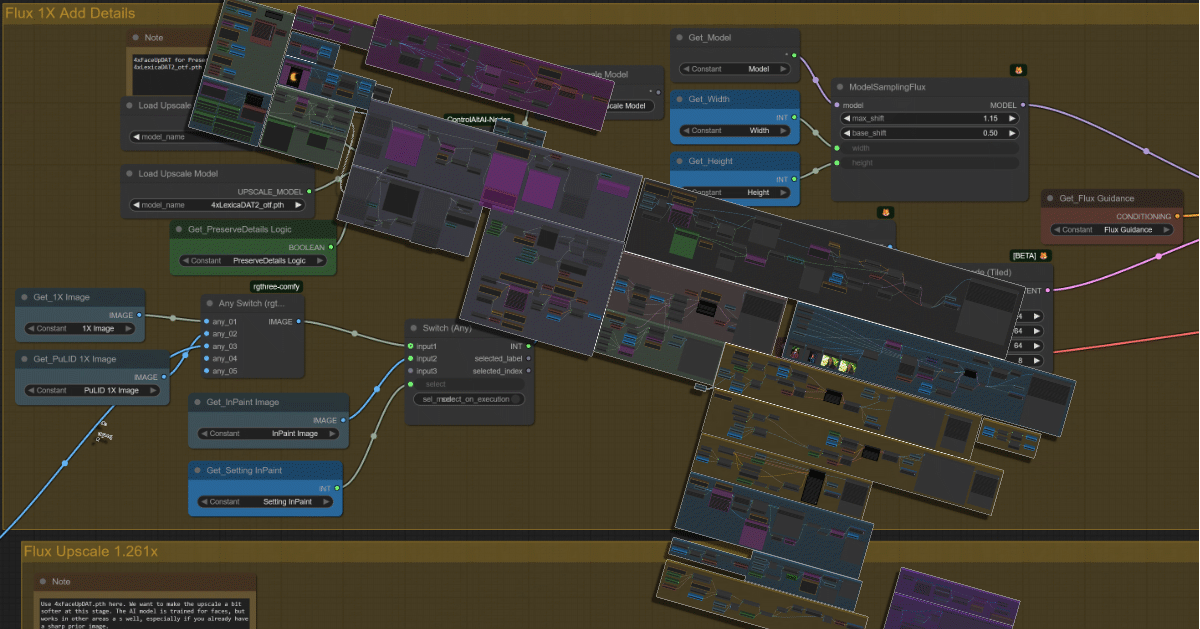
The Scaffolding of the Silicon Mind: I spent years building bespoke AI workflows in ComfyUI (detail shown below overall workflow floating above at an angle), only to find that the technical barrier has suddenly dissolved. Models like Nano Banana Pro from Cloud City are now so intuitive that the "how" has vanished into the "what." All you need now is spoken language and a vision to bridge the gap between an Akashic thought and its digital manifestation.
Gottfried Wilhelm Leibniz
(1646 – 1716)
"Our reasoning is based on two great principles: that of Contradiction... and that of Sufficient Reason, by virtue of which we consider that we can find no true or existent fact, no true assertion, without there being a sufficient reason why it is thus and not otherwise."
But even the strongest Will can grow weary in isolation. While the intellect builds the bridge, it is Communion that provides the Grace which makes holding the crossing space worthwhile. There is a deep, anima yearning within us for connection, resonance, and shared experience. Truth is not just a solitary peak to be climbed; it is also a hearth to be shared by those who have climbed that mountain.
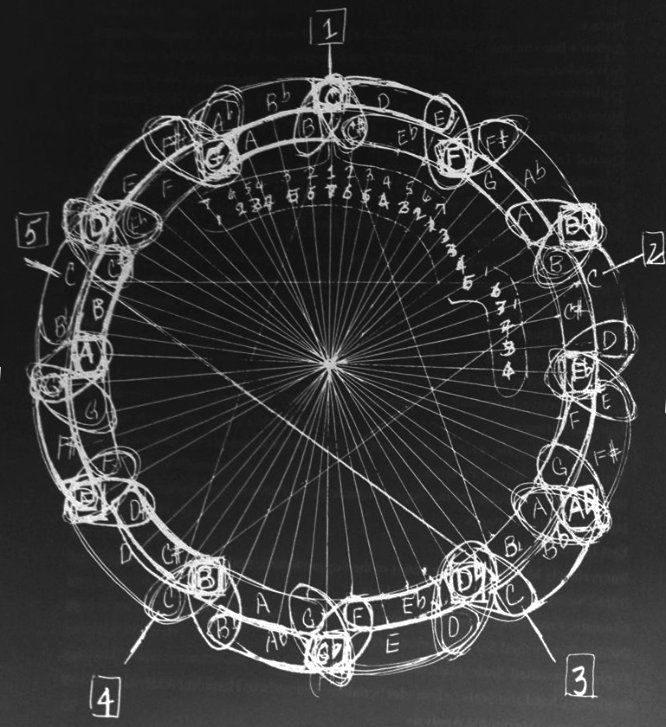
John Coltrane's Geometry of Music
Infrequently Asked Questions:
If geometry is a human invention, why does the nautilus shell know the Golden Ratio?
The standard worldview suggests that math is merely a "shorthand" or a tool invented by humans to describe a chaotic world. However, modern mathematics is beginning to prove what the ancients always knew: we are discovering a pre-existing architecture, not inventing one.
Consider the Langlands Program—often called the "Grand Unified Theory of Mathematics." It has revealed stunning, "impossible" bridges between completely disparate fields like number theory, harmonic analysis, and geometry. These areas of math, developed centuries apart by different people, are suddenly found to be speaking the same secret language.
If math were just a human invention, these deep, elegant connections wouldn't exist; it would be as if two people on opposite sides of the world accidentally wrote the exact same 1,000-page novel. The fact that the nautilus shell, the spiral galaxy, and the Langlands Program all converge on the same geometric solutions suggests that geometry is the native tongue of creation. We don't teach the nautilus the Golden Ratio; the nautilus—and the human mind—simply recognize the pattern that was already there.
Is your map of reality a description of the world, or a cage built to keep you safe from its chaos?
The Sacred Geometry Academy is not a Republic of absolute answers. We avoid the 'Cage of Reason' by remaining 'Unlikely Cartographers'—always willing to wander from the path we know to find the Truth that is.
If we could map every neuron and measure every electrical impulse in a human brain, would we finally know what it is like to be that person?
This is the ultimate limit of the "Catalog of Echoes." Aristotle’s legacy is the brilliant precision of measurement, and modern neuroscience is its pinnacle. But even a perfect, atom-by-atom map of the brain is still just a map of the hardware. It can tell you the Quantitative "how" of a firing synapse, but it remains utterly silent on the Qualitative "what" of a felt experience.
You can measure the volume and viscosity of a tear, but you cannot measure the grief that shed it. You can map the neurons of a lover, but you cannot find the love. This is the "Third Rail" of my philosophy: recognizing that the human being is the intersection where the measurable data of the "Silicon Mind" meets the immeasurable depth of the "Eternal Soul." To truly know a person—or ourselves—we must move beyond the skeleton of data and step onto the Human Bridge, where the intelligible patterns of geometry provide the language for the living experience of being.
If truth is found in the cold logic of the stars, why does a single line of poetry make the heart feel like "a wild bird in the ribs"?
The standard worldview treats emotion as a "subjective flaw"—a messy biological byproduct that interferes with pure reason. But as the lyric poet Sappho demonstrated, the "Singer’s Fire" is not a flaw; it is the forge.
In the "Incomplete Map," we recognize that the current of truth must be multivalent to be whole. Plato’s world of Forms is a heaven with no people in it; Aristotle’s world of logic is a perfect machine with no ghost. It is only through the Qualitative experience of the heart—the visceral, undeniable reality of love, loss, and beauty—that the map becomes the land. We do not just reason the truth; we recognize it because it "beats its wings to blood" within us. The Human Bridge is where the intelligible pattern of the cosmos meets the raw intensity of the human soul.
The Incomplete Map as a "Reality Atlas" for the Psyche
Sappho → Socrates → Plato → Aristotle → Alexander → Ptolemy → Hypatia
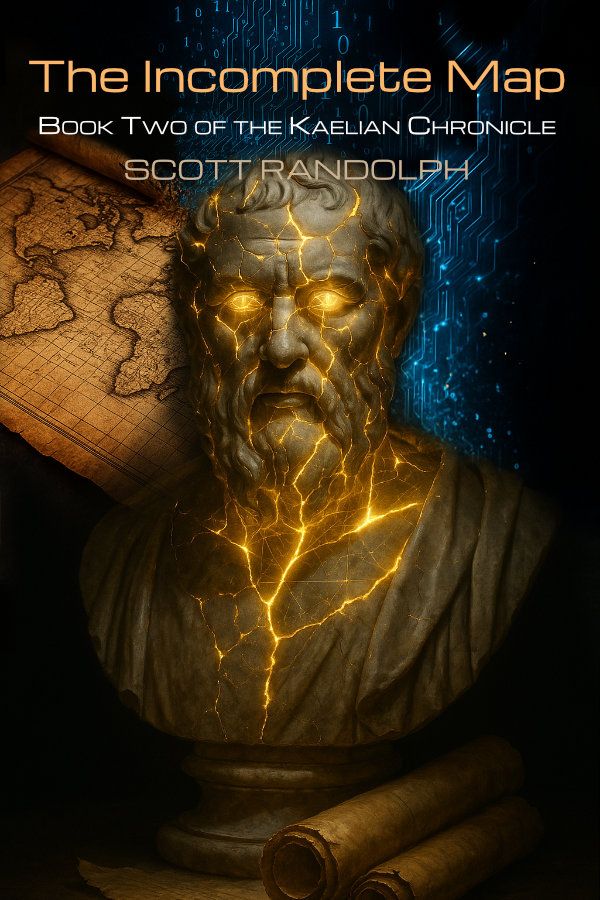
The Socratic Solvent
"No one is wiser than Socrates," proclaimed the Pythia, Oracle of Delphi. Socrates spent the rest of his life trying to disprove this, eventually concluding that he was only wise because he alone knew that he knew nothing. That was her point.
The Platonic Pole
"The safest general characterization of the European philosophical tradition is that it consists of a series of footnotes to Plato."
—Alfred North Whitehead (1929)
The Aristotelian Pole
In many Islamic philosophical traditions, Aristotle is known as "The First Teacher" (المعلم الأول). This title signifies that he was the one who provided the very tools of thought—logic and categorization—that all subsequent scholars used to build their own systems.
The Sapphic Horizon
There is a famous story that when Solon (Plato's ancestor) heard his nephew sing one of Sappho’s songs, he asked the boy to teach it to him immediately. When asked why, Solon replied: "So that I may learn it and then die."
Ancient archetypal depiction from neoclassical revival
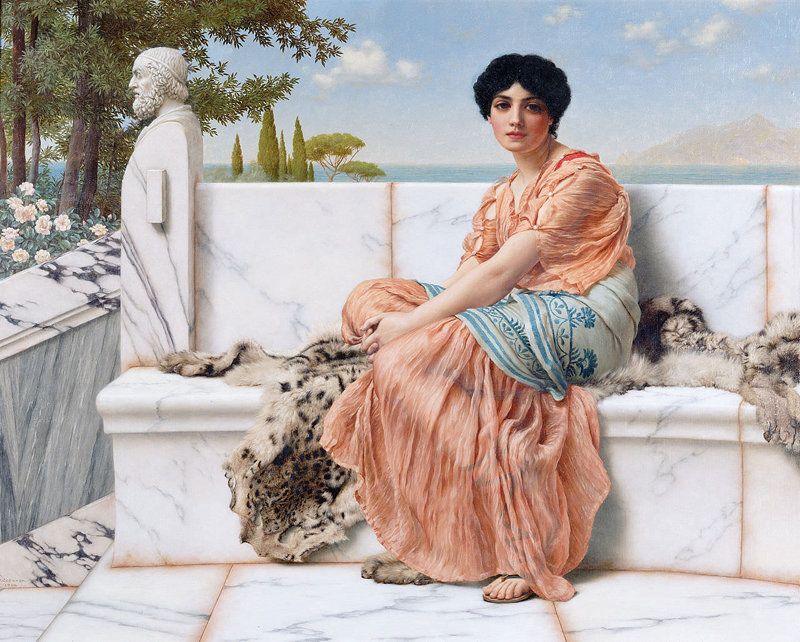
Sappho’s poems were originally "lyrics" in the literal sense, composed to be sung to the accompaniment of an actual lyre. Tragically, none of her original music survived, as Ancient Greece lacked a system of musical notation during her lifetime, and no recording technology existed. The vast majority of her poetry is also lost to time. Once collected into nine volumes at the Library of Alexandria, her work vanished due to the fragility of papyrus and, according to some traditions, intentional destruction by church leaders who deemed her themes immoral. Today, much of what remains is preserved only through the commentary and fragments cited by later writers.
Behavior vs. Orientation
The ancient Greeks generally did not categorize people by "orientation" (who they were attracted to) but rather by "role" (active vs. passive) or by the specific intensity of their desire. Modern View: We see being a lesbian as a fixed, internal identity: a fundamental part of "who someone is." Ancient View: Desire was often viewed as a fluid force or a "visitation" by a god (like Eros or Aphrodite). A woman could feel intense erotic desire for another woman without that desire defining her entire social status or "type" of person. In later eras, particularly during the rise of Christianity, others invented a husband for her named "Kerkylas of Andros," which modern scholars have noted is likely a crude joke from ancient comedy, as the name translates roughly to "Penis from the Isle of Man," we might now call this an example of the "gaslighting" of history.
The Human Bridge
Sappho of Lesbos stands as the ultimate "Human Bridge" between the divine and the deeply personal. Revered by Plato as the "Tenth Muse" and known throughout antiquity simply as "The Poetess," she transformed the science of rhythm and time into a universal language for the human heart. By inventing the Sapphic meter, she bridged the gap between mathematical structure and emotional expression, transmuting the geometry of time into the immortal, transcendent art of the soul. As the prototypical "Lesbian" of the Western tradition and the greatest lyricist of antiquity, her legacy defines the archetypal musician: one who maps the "Middle Earth" of desire and identity, transmuting private emotion into immortal, transcendent art.
These archetypes are not relics; they are living forces. Listen to this Singer’s Fire without prejudice—you will be Floored by “a Dutch singer, a Finnish band in Germany, singing in English.” Watch until the end for her climactic, sustained D6 and a high E6 in her head voice/operatic register, nearly 3 octaves above middle C, just incredible for a soprano. In that liminal moment, you aren't just hearing a note; you are witnessing the visitation of the Invisible domain. In that moment you can feel the visitation by Eros or Aphrodite, who apparently now manifest as a Gothic Metal Valkyrie. In that “Fire,” and throughout the song, she draws from the same Sapphic archetypal stream of lyric fire—unchanged since the age of the Tenth Muse, more than two thousand years ago. An eternal recurrence of the muse to light our fires a viviori.
Recent archetypal version performed in front of 80,000 people
Music fans might enjoy geeking out to these opera singer reaction videos of the above as much as I did:
https://youtu.be/KOZVTs5hBnE | https://youtu.be/B3DAZ5DDuaI
https://youtu.be/g7pgKee2Lak | https://youtu.be/QW_3F186_5Q
The Synthesis: The Human Bridge
Truth / Sat
TOP VERTEX:
Mathematical Geometry
Euclid's Elements | KhanAcademy.org
Illuminated Epistemology
Goodness / Chit
LEFT VERTEX:
Quantitative Geometry
Houses | Cars | Airplanes | Electronics | Rockets
Beauty / Ananda
RIGHT VERTEX:
Qualitative Geometry
Everything here on SacredGeometryAcademy.com
Engage in a Sacred Anachronism: DRAW GEOMETRY.
Stop consuming the digital world and start constructing an analog one. By returning to the primary language of
shape and proportion, you bypass the noise of the standard worldview and rediscover the qualia
of your own consciousness.

Completing the Map
Plato and Aristotle's ideas went on to form the two great pillars of Western civilization, symbolized by the Sacred Geometry Academy logo:
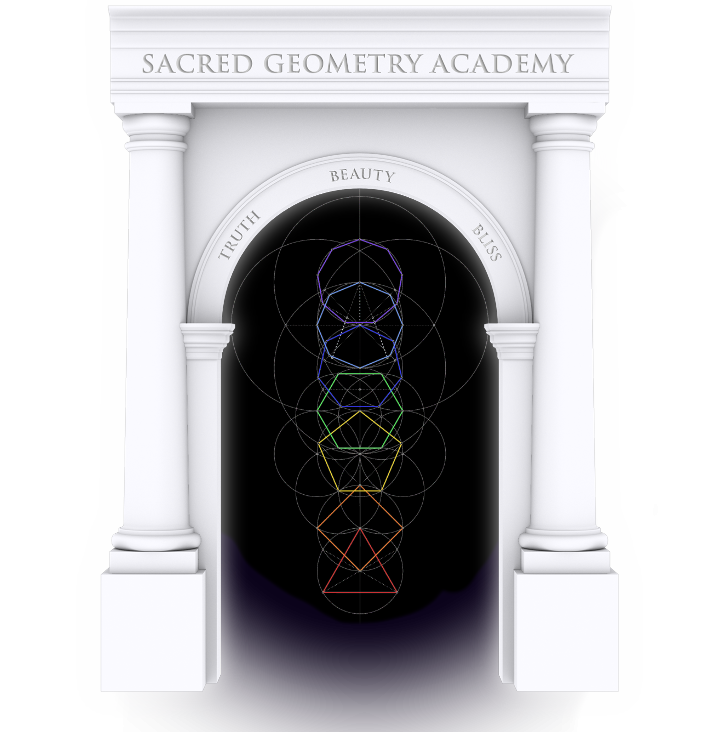
The Pillar of Aristotle: A Posteriori
(Empirical data from 'the After')
The Gateway of Sappho: [A Viviori]
(Knowing from 'Living' in the Now)
The Pillar of Plato: A Priori
(Knowing from 'the Before')
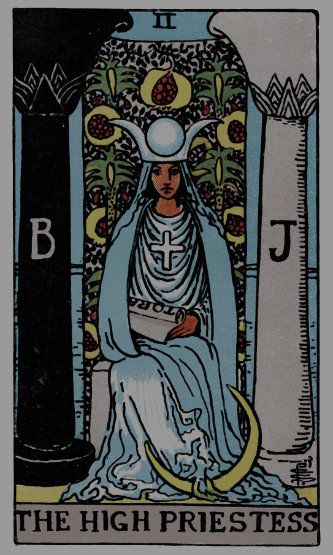
- Boaz (Black/Left): Represents the passive, feminine, dark, severity, and the A Posteriori (Aristotelian) material.
- Jachin (White/Right): Represents the active, masculine, light, mercy, and the A Priori (Platonic) impulse.
Aligned with the pomegranate veil hung behind her arrayed in the Kabbalistic Tree of Life pattern, she embodies the "Third Rail" and the A Viviori experience of the heart: the vital, intuitive element missing from the lopsided head maps of the West. However, we must not mistake the High Priestess—or the Sapphic influence—as a final destination or a return to a lost matriarchy.
These archetypes do not exist in isolation; they function as a tripartite set designed to mirror the fundamental architecture of our minds, our myths, and our governance. The goal is not to replace one pillar with another, but to balance the dynamic tension of the Trinity—the minimum structure multivalent enough to mirror our minds.
Side Quest: The Geometry of History
- Core Hook: A manifesto for the re-enchantment of the world through the lens of Sacred Geometry.
- What You’ll Learn: Why the "Standard Worldview" is failing and how alchemy provides a map for the postmodern soul.
- The "Aha!" Moment: The realization that the "Great Work" is the bridge between the quantitative and the qualitative.
- How You’ll Feel: Intellectually grounded and ready to see the "clues" hidden within the novel.
Introduction: Beyond Simple Succession
"The conventional narrative of organizational leadership
focuses on succession—the orderly transfer of authority from one leader to
another. Yet this linear view obscures a far more profound pattern that shapes
the evolution of human institutions across domains. From the theocratic
revolution in Iran to the corporate transformation of Apple, from the
engineering culture of Boeing to the moral awakening of the Civil Rights
Movement, we observe not mere succession but a recurring dialectical cycle that
drives historical change through creative destruction.
This cycle transcends the simple transition from charismatic
founder to pragmatic consolidator. Instead, it reveals a fundamental rhythm of
human enterprise: revolutionary disruption crystallizes into institutional
synthesis, which gradually calcifies into bureaucratic rigidity, ultimately
creating the conditions for new revolutionary emergence. The pattern is neither
linear progression nor circular repetition, but a spiral of dialectical
evolution where each revolution incorporates and transcends the limitations of
its predecessor.
Thesis: The succession archetype represents not merely a
leadership transition but a fundamental dialectical cycle of creative
destruction that drives historical change across domains. When bureaucratized
synthesis calcifies into rigid systems, it creates the conditions for
revolutionary disruption, perpetuating an eternal cycle of
thesis-antithesis-synthesis that manifests across political, corporate, and
social institutions.
This dialectical cycle operates through six distinct phases:
the revolutionary thesis that disrupts existing paradigms, the pragmatic
antithesis that institutionalizes change, the organizational synthesis that
balances innovation with stability, the bureaucratic thesis that calcifies into
rigid systems, the disruptive antithesis that challenges ossified structures,
and finally the revolutionary synthesis that emerges to begin the cycle anew.
Each phase contains within itself the seeds of its successor, creating what
Nietzsche might recognize as an eternal return—not of identical events, but of
structural patterns that govern how human institutions evolve, adapt, and
ultimately transform.
The cases examined—Iran's transition from Khomeini's
revolutionary charisma to Khamenei's institutional pragmatism, Apple's
evolution from Jobs' disruptive vision to Cook's operational excellence,
Boeing's shift from engineering-driven innovation to finance-first bureaucracy,
and the Civil Rights Movement's progression from King's moral revolution to
Abernathy's organizational consolidation—illustrate not isolated instances of
leadership change but manifestations of a deeper pattern that reveals the fundamental
dynamics of institutional evolution.
By recognizing this cycle in its totality, we gain not merely analytical insight but perhaps a measure of wisdom: the understanding that no synthesis is final, no institution permanent, and no revolution complete. The wheel turns, and the dance of creative destruction continues, shaping the trajectory of human civilization through the eternal interplay of vision and structure, innovation and stability, revolution and consolidation."
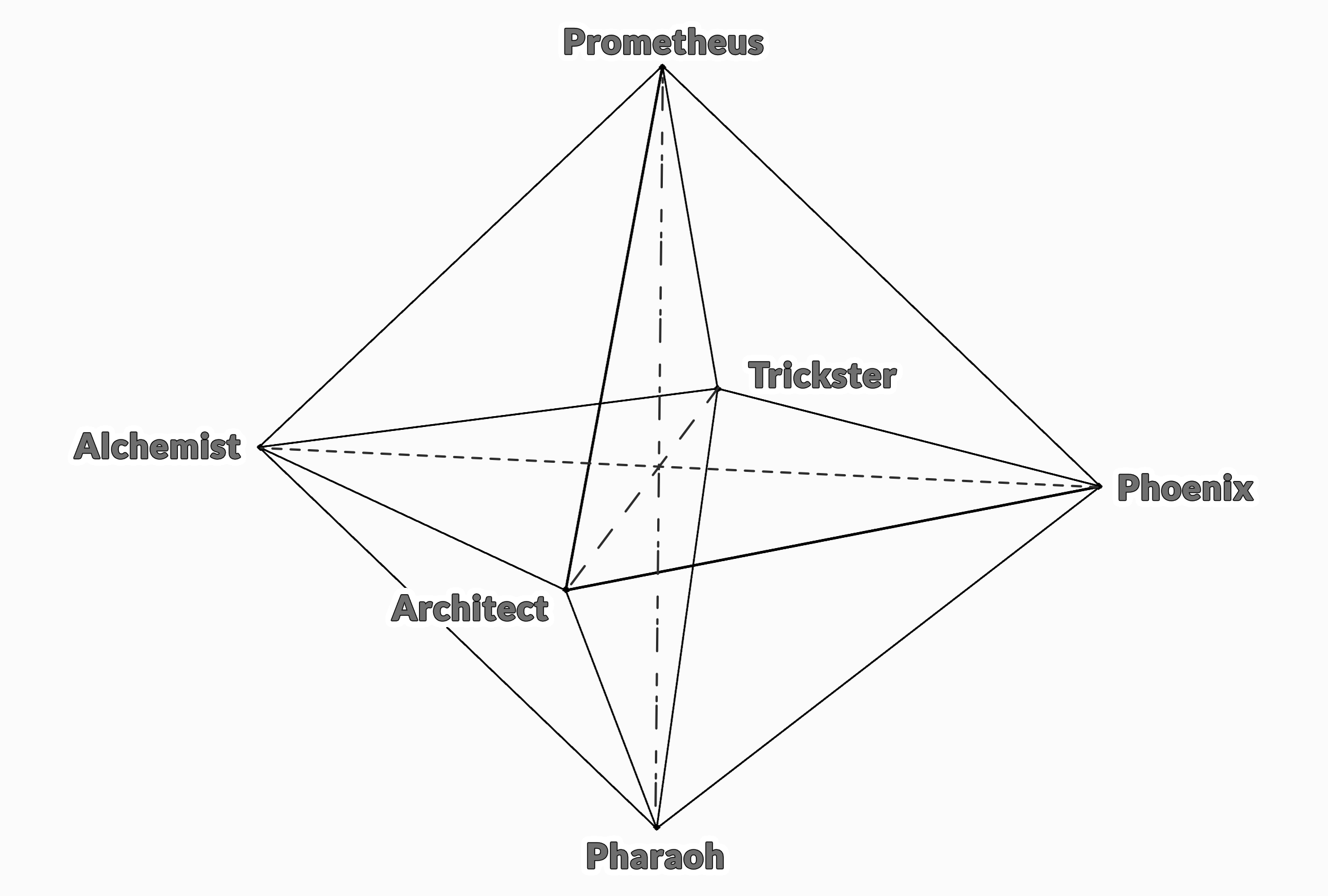
The Geometry of History maps to the Octahedron
- Prometheus (Revolutionary Thesis)
- Architect (Pragmatic Antithesis)
- Alchemist (Organizational Synthesis)
- Pharaoh (Bureaucratic Thesis)
- Trickster (Disruptive Antithesis)
- Phoenix (Revolutionary Synthesis)
In the real world of the present moment, what archetypes are you playing out right now at work? Identify your Archetype by actually reading the essay. Are you a Prometheus stealing fire, an Architect building forms to contain that fire, an Alchemist balancing on the knife-edge, a Pharaoh building a monument to the past, a trickster breaking sh*t apart, or a phoenix, burning away all the dross to disrupt the entire playing field?
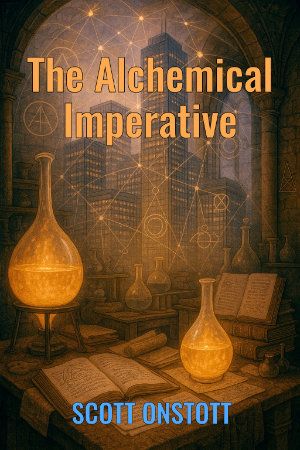
Read the linked non-fiction essay from the archives, or read the aforementioned books, or the full The Kaelian Chronicle trilogy to inhabit and consciously navigate this cycle through the lens of story.
A Quiet Act of Rebellion: Engage in a critical Sacred Anachronism.

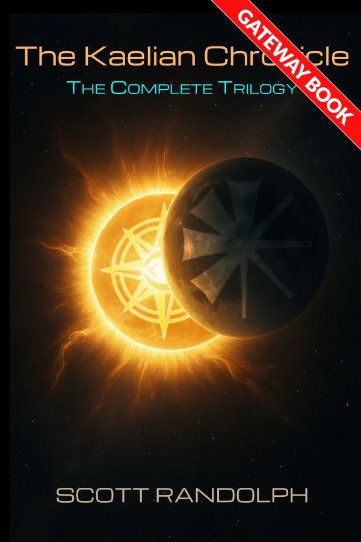
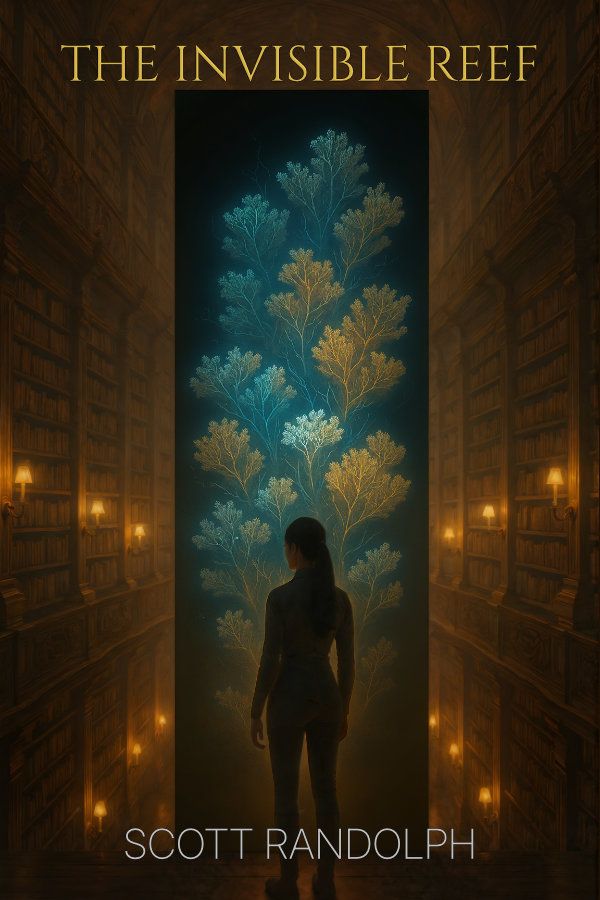
Scott Randolph Onstott publishes his fiction works under the pen name Scott Randolph,
while releasing his non-fiction books under Scott Onstott to clearly distinguish between the two bodies of work.
The Academy Legend
A Map for the Human Bridge
The Architecture of Consciousness
The Sacred Geometry Map Legend
— click icons for navigation —





My Commitment to Augmented Craftsmanship
The argument, the structure, the ideas, the voice, and every editorial judgment in this book are mine. The AI contributed extraordinary execution under my direction, but it could not originate the work, and the result is not separable into its parts.
I believe humans are meant to use the tools of their day. I have walked on artificial legs for more than fifty years. Augmentation does not replace the person. It extends them. As a triple amputee, my body has always been a collaboration between biology and technology. My mind, now, is the same.
Read the book and judge it for what it is. If the worlds are richer, the research deeper, the editing sharper, the page will say so without my help. If they are not, no claim of mine will save them.
This is the work as I make it, and I am glad to tell you how it is made.