Quantitative Geometry

excerpt from sacred geometry: philosophy & worldview (pages 12-13)

"This branch is geometry’s most popular one and is by far its most practical. Using geometry to draft, design, dimension, and model forms—or to measure the world—is essential in countless technical professions such as architecture, engineering, industrial design, electronic circuit design, many disciplines of science and even in entertainment in terms of set design, increasingly in animations and special effects and even in stock market and crypto investment.

Benjamin Franklin
(1706-1790)

"As to the usefulness of geometry, it is as certain that no curious art or mechanic work can either be invented, improved, or performed without its assisting principles."

My career started with manual drafting in the late 1980s, and I was a huge proponent of the tectonic shift which transformed numerous analog professions to using digital tools. In the process we gained tremendous practical advantages and can now quantify, design, simulate, and build things today that were never possible previously. It was a marvellous revolution.
However, I can tell you that in the process we also lost something essential—the visceral linkage between hand, paper, and world that drawing with the human body used to bring to the table.

Consider for a moment that people experienced this natural connection from the origin of civilization until the early 1990s. Those whose careers started later are probably intellectually aware of the tectonic shift in technology, but fewer still are viscerally aware of the sensibility of stylus, ruler, and compass and what that natural immediacy meant to countless generations.

Understanding how to use geometry quantitatively can help you get a job or improve your professional skills. Most of my career focused on learning, using, and teaching AutoCAD (and other design software) to members of the Architecture—Engineering—Construction industry.

The quantitative use of geometry can fulfill the core human desire to learn, build skills, work, achieve, and succeed in many industries."

It might be illuminating for you to learn how I used quantitative geometry in my career. It's one example to give you a taste.

My Quantitative Uses:

Quantitative Geometry Courses

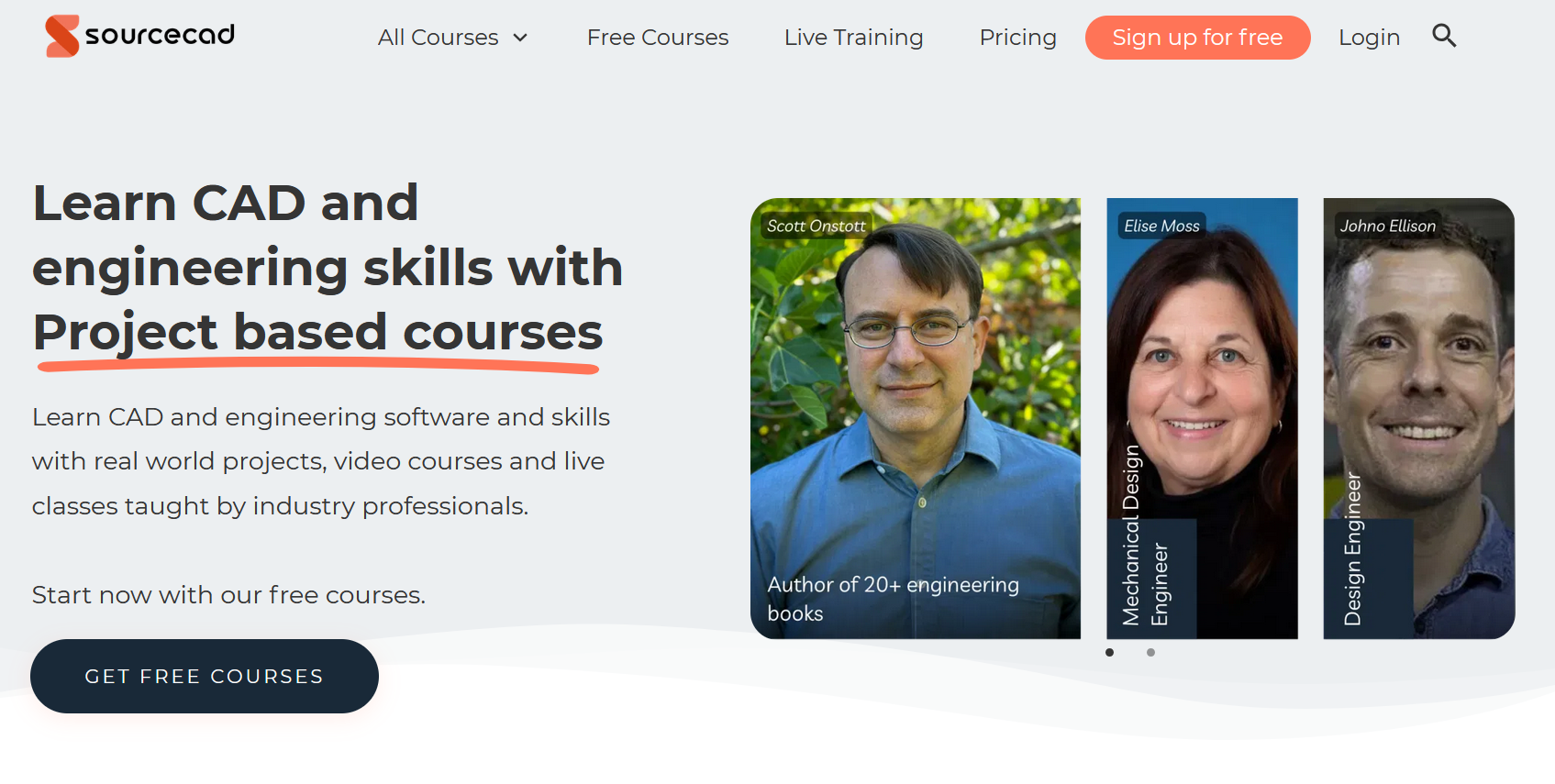
I have recorded 10 video courses at SourceCAD.com teaching AutoCAD Architecture, AutoCAD Electrical, Revit, and Dynamohundreds of hours of high quality video instruction for architects and engineers in the tools they need to use proficiently every day.
sourcecad pront page top third featuing scott onstott prominently as featured course creator
A pioneer in this space, I have been making video software tutorials since 2000. These cover the following apps in which I gained significant expertise: 
3ds max, Autodesk VIZ, Lightscape, Autodesk AutoCAD & AutoCAD LT, Autodesk Architectural Desktop, Revit, SketchUp, Twilight Render, Adobe Photoshop, Illustrator, Premiere Pro, After Effects, Audition, Fresco, Shapr3D, Procreate, Sketchbook, Euclidea Sketches, Unity, Wordpress, plus AutoLisp, JavaScript & C# programming. 
Here is a fragment of complex procedural, uncommented lisp code I wrote circa 1994, ten levels deep. Code and poetry share a hidden, ineffable elegance; they are simply the same universal Logos authored through different hemispheres of the brain. Code maps the world; poetry maps the soul.
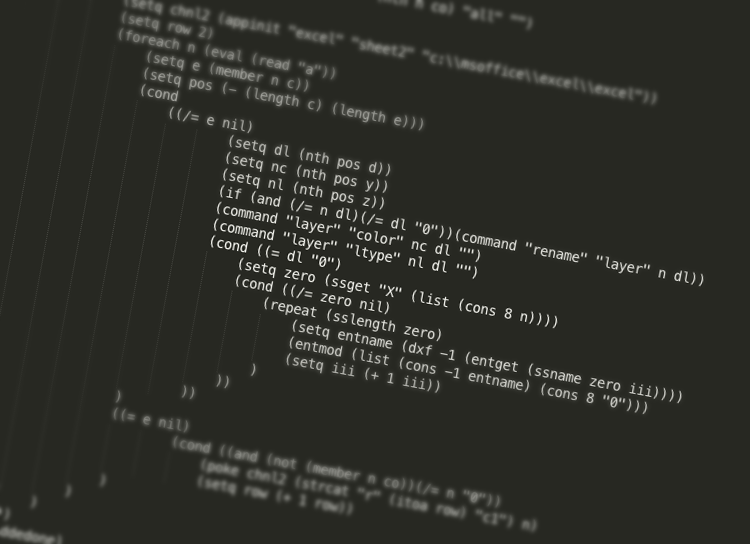
lisp code on screen
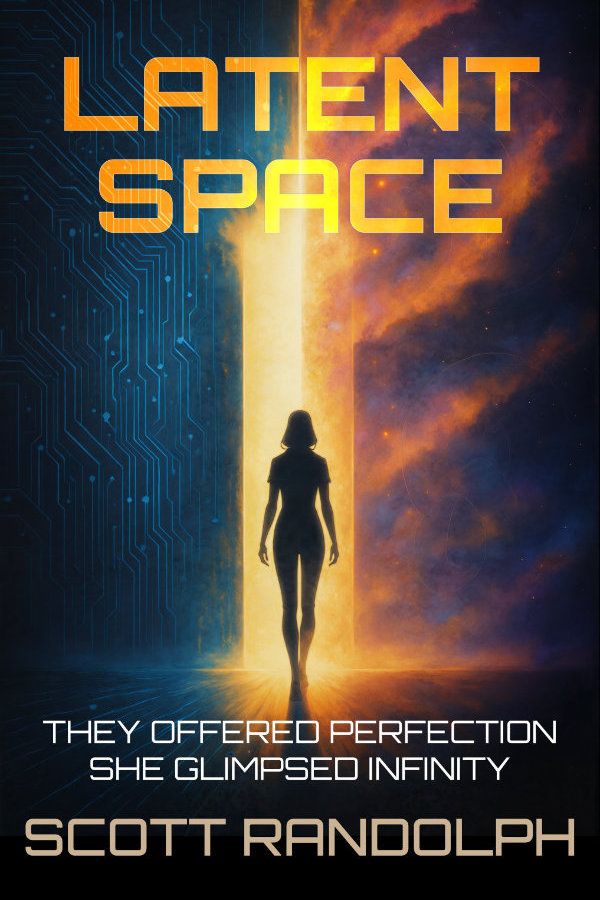
In the 2010s I used to run https://grok.academy back when the main problem was explaining to people the meaning of the word grok, which few outside tech circles seemed to understand. So I closed it down, tired of having to explain and spell g-r-o-k. That has all changed with xAI's Grok, a household name soon to be an artificial general intelligence, and on track to eventually become an artificial super-intelligence in the 2030s. You should really read my fiction, especially Intelligence and Latent Space for a preview of potential futures. 

I was a decade too early for the word 'Grok' to be understood by the mainstream; today, as we approach AGI, 'Grokking'—the ability to understand something intuitively and fully—is the most vital skill a human can possess.
grok academy banner from my old website grok.academy featuring a woman's head filled with neural connections and sfotware icons
Back in Y2K I started burning video courses on DVD-ROMs from my PC and sold them one at a time to my students and shiped them out worldwide on ScottOnstott.com. Then I transitioned to selling online courses through the Academy of Art University, video2brain, cgArchitect, Wiley, and Lynda.com. 

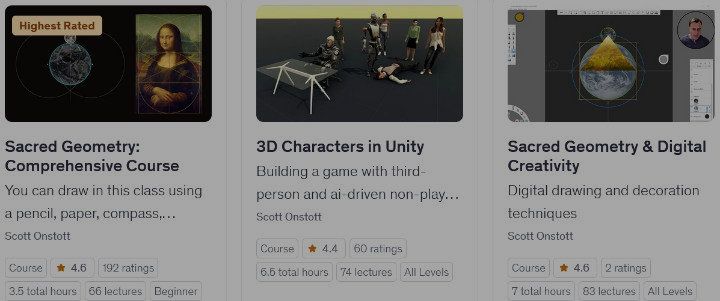
More recently, I continue to offer qualitative geometry courses through Udemy, Skillshare, Learndesk, Eduonix, LinkedIn Learning, and SourceCAD.com in India. Of all these, here is complete listing of my 28 LinkedIn Learning video courses, to give you a sense of my areas of focus within Architecture | Engineering | Construction:
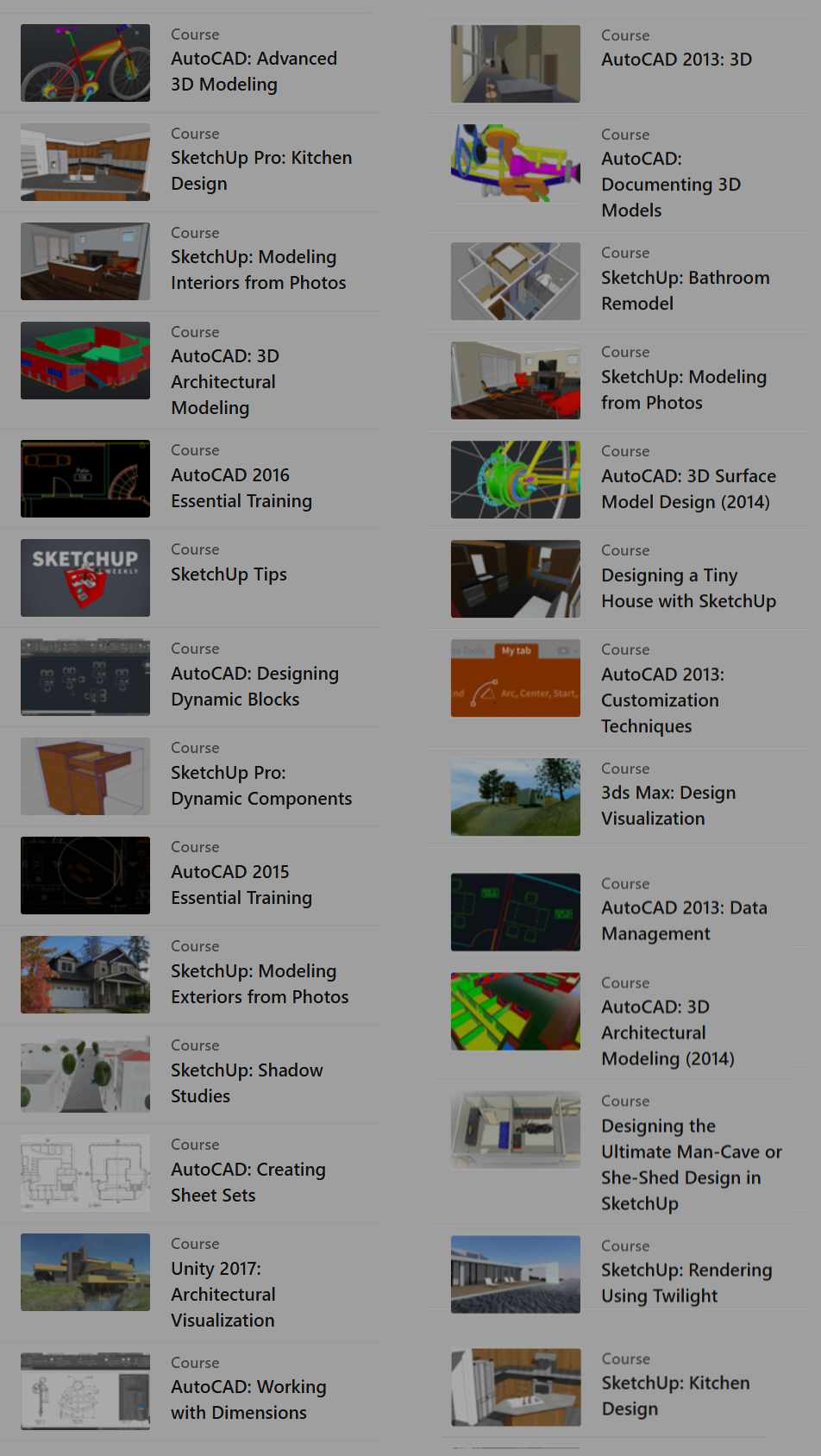
grok.academy banner from scott's old website

Engage in a Sacred Anachronism: DRAW GEOMETRY.

Stop consuming the digital world and start constructing an analog one. By returning to the primary language of
shape and proportion, you bypass the noise of the standard worldview and rediscover the qualia
of your own consciousness.

Slogan text that reads 'DRAW YOUR OWN MAP. THEN COLOR IT.'

Technical Books I Wrote

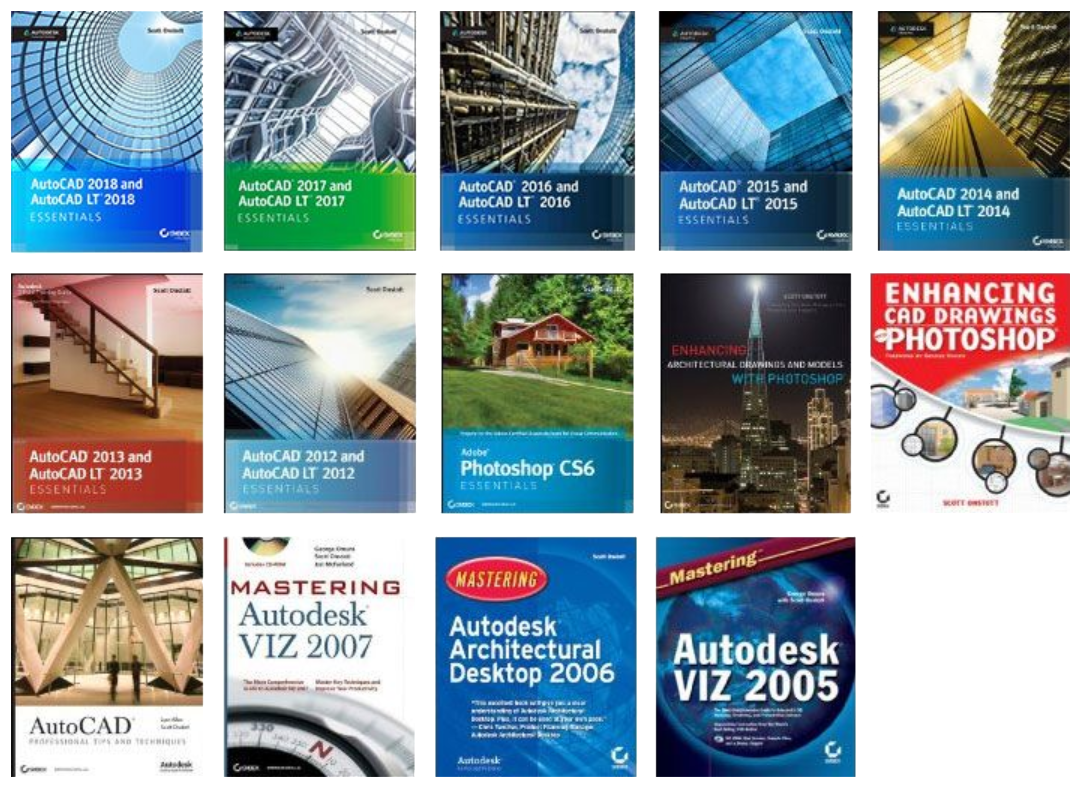
I am the author of 14 technical books about geometry and graphics, primarily for an audience of architects and engineers, with translations available in 12 languages. These books were all published by Sybex, an imprint of Wiley. I stopped writing doorstopper technical books when people stopped wanting them in favor of video courses. Don't worry, I still write trilogies and anthology omnibus doorstoppers (700+ pages).
14 of scott's technical book covers

Technical Books I Edited

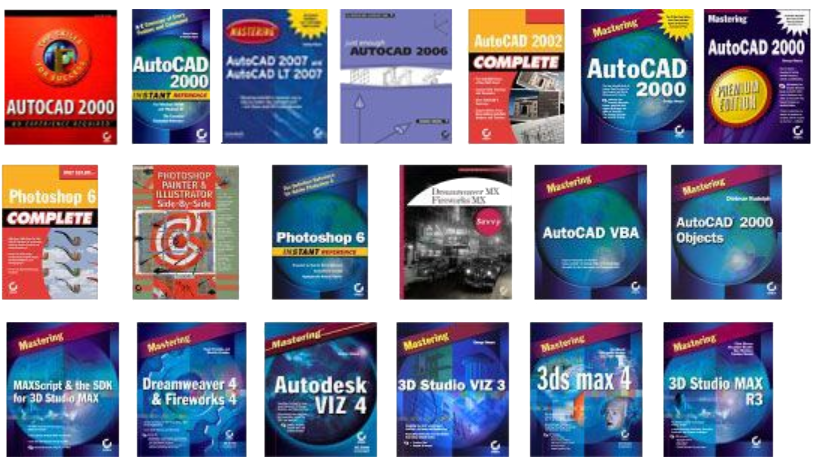
Before I wrote my own books, I tech-edited books by other authors. Editing taught me the craft of producing technical books about geometry and graphics. Some of these books go back into the mid 1990s, when computer graphics was in its infancy and Nvidia had just started making graphics cards.
book covers of books scott onstott edited

My Education and Tech Evolution So Far

In grade school, I played on my mother’s manual Smith Corona typewriter, but our actual schoolwork was strictly analog—written in cursive "long hand" or printed in block letters. By high school, I had graduated to a Brother AX-25 electronic typewriter for essays. It featured a tiny LCD that displayed a horizontal scrolling 16 characters at a time; the daisy wheel would only strike the paper as the letters scrolled off the left side of the screen. This gave me just enough time to make "electronic corrections" before the ink hit the page—a revolution that finally spared me from the mess of White-Out bottles.

For math homework, where corrections were constant, I relied on 0.5mm mechanical pencils and Staedtler Mars Plastic eraser holders—the only way to maintain precision through the endless reworking of algebra and geometry. Things were a bit different then: my teachers all wrote on blackboards rather than whiteboards, and my geometry teacher famously took swigs from his flask during class. He was a functioning alcoholic who taught so poorly, and I was so bored that I eventually decided to learn geometry by reading the entire textbook on my own. It was just natural for Gen-X: figure it out yourself, what is the problem? I was used to it, having to always adapt, being born without my legs below the knee and without my right hand (as I detail in my book, The Unlikely Cartographer). That experience of self-directed study, and a lifetime of adaptation, taught me the foundations of a discipline and an attitude that would ultimately define my career.

When I started university in 1988, my parents gifted me a prestigious and expensive tool: the second Macintosh model—the "Fat Mac." Originally retailing for $3,300 in 1984 (roughly $10,000 in today's money), it featured a 9" grayscale screen, an 8 MHz processor, and an upgraded 512 KB of RAM (the "fat" over the original 128 KB). It had no hard drive, only a single 3.5-inch floppy diskette drive. The workflow was an exercise in great patience: I had to load the operating system from one diskette first, eject it to load the software (like Microsoft Word) from a stack of others, and finally save my work onto a separate hard-shelled diskette.

I spent two years studying mechanical engineering before pivoting to architecture, eventually earning my degree in 1992.
scott onstott's degree in architecture
This was the "pre-CAD" era, "pre-Web" era; my projects were all drafted by hand, and my designs were presented through physical models in design charrettes. My engineering years were spent with pure math and quantitative reasoning. The architecture curriculum was steeped in qualitative geometry, which I balanced with my favorite subjects in the last 2 years: personality psychology, art history, and the history of architectural and urban design. These two streams eventually crossed in my soul, leading electrically to my 2010 documentary series, Secrets in Plain Sight.

The transition to the digital age was happening right in front of me. My college friend, Tiffany Shlain—who would go on to found the Webbys—even appeared on Good Morning America as their "on-air Internet expert" to explain to the nation what "the Web" actually was. I was struck by her moxie in landing that gig, but it was telling that the media turned to a 24-year-old to explain the future to a nation. A generation or two later, that dynamic remains unchanged; technology is changing faster than the generations can assimilate.

Looking back, the technological leap is staggering. My current PC has 64 GB of RAM—131,072 times more memory, or five orders of magnitude, than my university Mac. My 16 TB backup hard drive offers seven orders of magnitude more storage than a 1.4 MB floppy disk once did, and my four-year-old Ryzen processor runs five orders of magnitude faster than that 8 MHz Fat Mac. Instead of a 9" screen that could display 256 shades of gray, I now sit in front of an array of three 27-inch 4K monitors with wide color-gamut support with (millions of calibrated HDR colors) made for designers. 

I ran this through an LLM to help refine my draft, and it used an ungodly amount of compute to do so. To put it in perspective, while my local workstation is a beast, the datacenter that processed these words operates at a scale six orders of magnitude beyond my own—roughly a million times the raw processing power, fueled by enough electricity to power a small city. If my PC is a single candle, the LLM cluster is a stadium floodlight. This is absolutely freaking crazy.

Yes, the jump from my current PC's processor and RAM to the cloud LLM's processing and RAM is actually larger than the jump from my 1984 Fat Mac to my current PC. Friends, we are now inside the event horizon of the singularity. No one gets out of here alive, but maybe we'll live a heck of a lot longer enjoying universal high income poolside, with robots serving our every need and beverage? I doubt it, but still I hope for a Jetsons future!
artist's depiction of a black hole
We take all this exponentially exploding hardware capacity for granted today, but when you look at the numbers, the tech distance I have traveled in the last 50 years is truly wild. However, the next 5 years are on track to bring more change than the last 50. WTF.

Are you ready? Tongue-in-cheek: Maybe we should ask a Gen-Alpha to explain artificial intelligence (AI), artificial general intelligence (AGI), and an artificial super-intelligence (ASI) to us? Wait, no one is going to be up to that trans-human task

We'll need an AI to understand an AGI and we'll need an AGI to understand ASI

Not sure anyone really even understands current AI in the first place. How does that very large matrix of numbers feel? We can ask it, but isn't that a simulation of qualia? What is the nature of consciousness? Are we just biological computers? What about our inner lives, our souls? How is it that consciousness collapses the wave function but computation does not? What is the nature of reality? Do we live in a simulation ourselves? If any of these questions intrigues you at all, please enjoy my fiction which address all of these issues in differing ways.

When was the last time you actively read a whole book of fiction? It's one of those 'sacred anachronisms' that keep us human, wrestling with the ideas to help you decide what you think about it.
cover of the algorithmic tide featuring a modern sailing megayacht with solar sails with azores in background
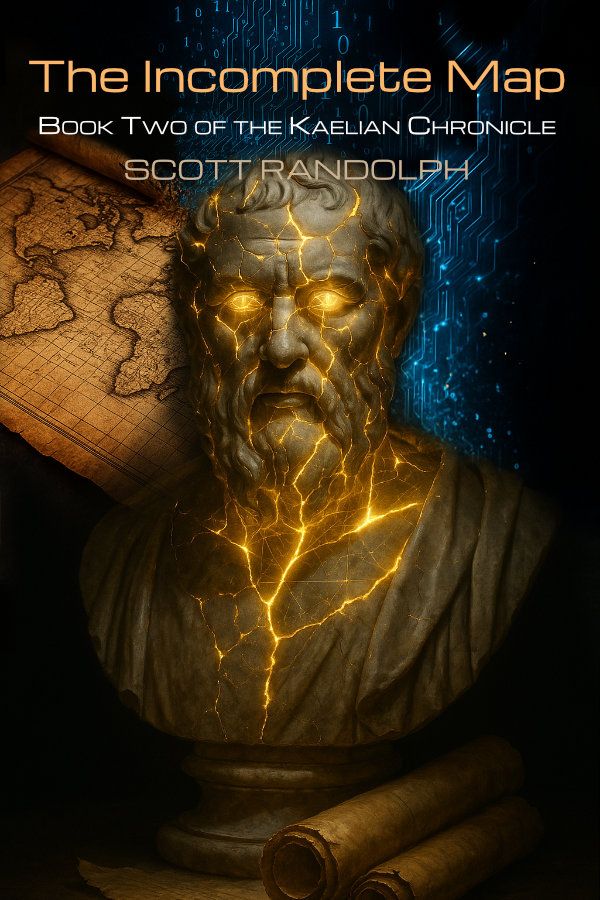
cover of the incomplete map showing fractured glowing bust of plato with glowing eyes, with an old map and silicon chips in the background
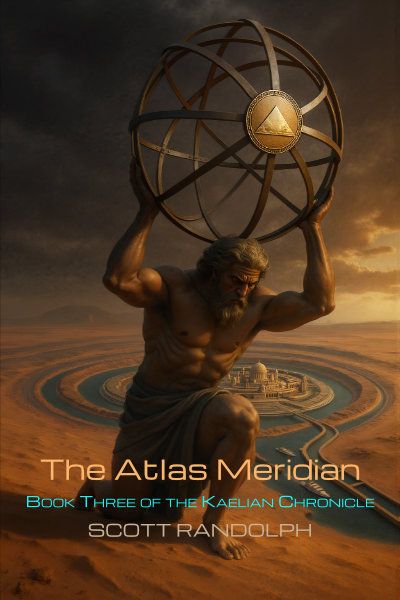
cover of the atlas meridian showing atlas holding up an armillary sphere above atlantis in the richat structure of the sahara
Personal Computer:
Then and Now


RAM
: 5 Orders of Magnitude Increase

Processing: 5 Orders of Magnitude Faster

Storage: 7 Orders of Magnitude Increase

Display: Single 9" Grayscale CRT vs. Triple 4K Wide-Gamut HDR designer monitors

Cloud Compute
(Local vs. AI):
6 Orders of Mag (1,000,000x) Further Increase!

Reclaiming the Visceral: Why I Built 'Q'

Master the Essence Before the Execution

If you are building a career in architecture, engineering, or industrial design, you will eventually need to master the "heavy hitters" of the quantitative world—professional tools like QCAD, or the industry-standards SketchUpAutoCAD, or Revit.  These programs are powerful, but their complexity can often obscure the very geometry they are meant to manifest.

I have found that the most effective way to master professional 3D/CAD/BIM is to first understand the "Qualia" of geometry—the inherent logic and feeling of proportion—without the distraction of command lines and complex coordinate systems.

Why Start with Q?

Q is my streamlined, "Qualitative" fork of QCAD. I stripped away the overhead of measurement and dimensions to create a pure environment for geometric exploration.
  • Transferable Skills: Because Q shares the same DNA as QCAD, every tool you learn and every "muscle memory" action you develop translates directly to the professional version.
  • Focus on Logic: By removing the quantitative "noise," you learn the underlying geometric construction methods that make you a faster, more intuitive drafter in any software.
  • Professional Output: Q uses the ancient standard .DXF format. You can start a design in the contemplative space of Q and "graduate" that exact file into QCAD or AutoCAD or SketchUp when it’s time to add dimensions, layers, 3D geometry, and written technical specifications for construction.

Your Graduation Path

Whether you are a student looking for a gentle entry into the world of 3D/CAD/BIM, or a professional wanting to reconnect with the sacred proportions that underpin your craft, Q is the perfect starting point.

Master the universal language of geometry in its purest form, and you will find that the transition to high-end quantitative software becomes not just easier, but a natural extension of your creative wit and will.

  1. Q (The Essence) – No dimensions, no distractions. Just pure geometry and the logic of CAD.
  2. QCAD or AutoCAD (The Execution) – Add the math, the layers, and the technical specs.
  3. Building Information Modeling: AutoCAD toolset (such as Architecture, MEP, Mechanical) or Revit, etc.
  4. Product Design and Manufacturing CAD/CA: Inventor, Fusion, Navisworks, etc.
  5. AI-Tools - watch this space because it will probably make much of the above 'legacy' or obsolete.

Q - Sacred Geometry Drawing App & Course

Not sure if you're ready for CAD? Start with Q.
The Optimal Q Experience:
  • Concentrate: On the precision of the line.
  • Contemplate: The meaning of the proportion.
  • Meditate: On the feeling (Qualia) of the finished form.
Open Source Tool | Expert Instruction
Q is built on open-source foundations, ensuring it remains a free and accessible tool for the geometry community. I believe the "universal language" should be available to everyone; therefore, the Q software is free and available for download on the course page below.

While the tool is free, the Foundation Q Pathway below is a paid experience designed to save you many hours of trial and error. By enrolling, you gain access to:
  • 5+ Hours of my Video Instruction: A step-by-step masterclass where I show you how to move from basic shapes to complex geometric analysis.
  • The Sacred Geometry Library: A curated collection of royalty-free DXF files I’ve built over years, allowing you to hit the ground running with classic patterns and my own personal explorations.

Epistemological Navigation

Utility / Chit

CAD drawing of Corinthian column capital plan view

Quantitative Geometry

Truth / Sat

Unit circle showing trigonometric coordinates

Mathematical Geometry

icon showing golden equilateral triangle with eye inside with letter G inside the eye

Illuminated Epistemology

Beauty / Ananda

Chartres rose window icon

Qualitative Geometry

Truth / Sat

TOP VERTEX:
Mathematical Geometry

Euclid's Elements | KhanAcademy.org

icon showing golden equilateral triangle with eye inside with letter G inside the eye

Illuminated Epistemology

Goodness / Chit

LEFT VERTEX:
Quantitative Geometry

Houses | Cars | Airplanes | Electronics | Rockets

Beauty / Ananda

RIGHT VERTEX:
Qualitative Geometry

Everything here on SacredGeometryAcademy.com

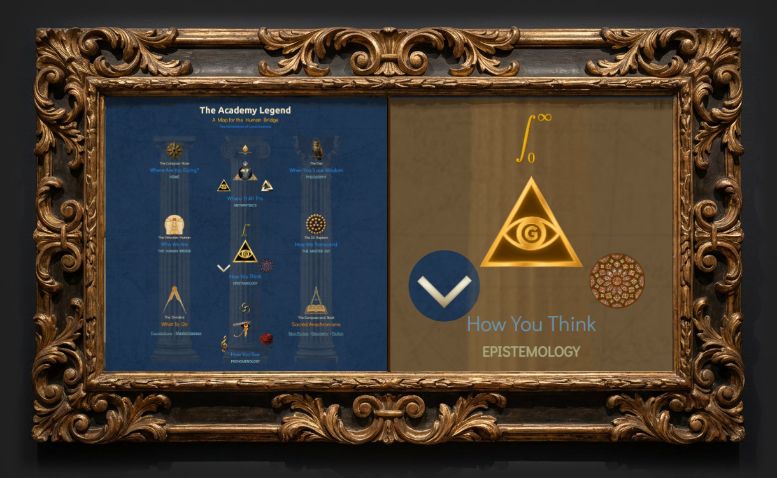
The Sacred Geometry Map Legend 

The Compass Rose - Where are you Going?
The Compass Rose

Where are you Going? (Home)

The Equilateral Triangle - How you Think
The Equilateral Triangle

How you Think (Epistemology)

The Droplet and the Ocean - What you Are
The Droplet and the Ocean

What you Are (Ontology)

The Impossible Triangle - Why it Matters
The Impossible Triangle

Why it Matters (Teleology)

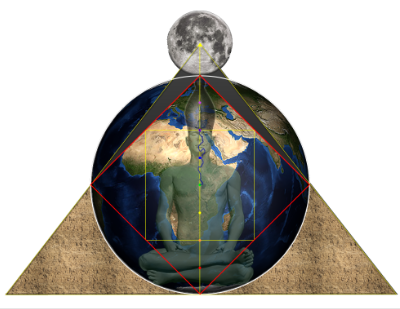
The Great Pyramid - Metaphysics and the Master Map of Reality
The Great Pyramid

Where it all Fits (Metaphysics)

The Vitruvian woman icon
The Vitruvian Woman

Who we Are (Human Bridge)

The Drafting Compass - What to Do
The Dividers

What to Do (Dual Pathways)

The Compass and Book - Sacred Anachronisms and the Library of Sacred Geometry
The Compass and Book

The Sacred Anachronisms

Created with